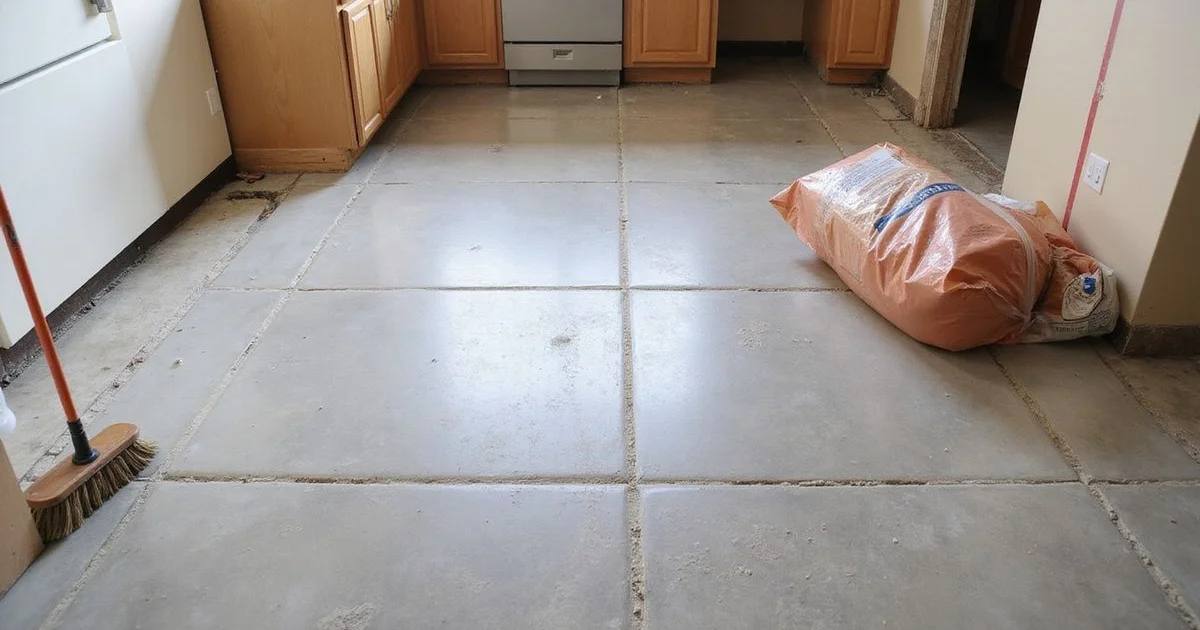
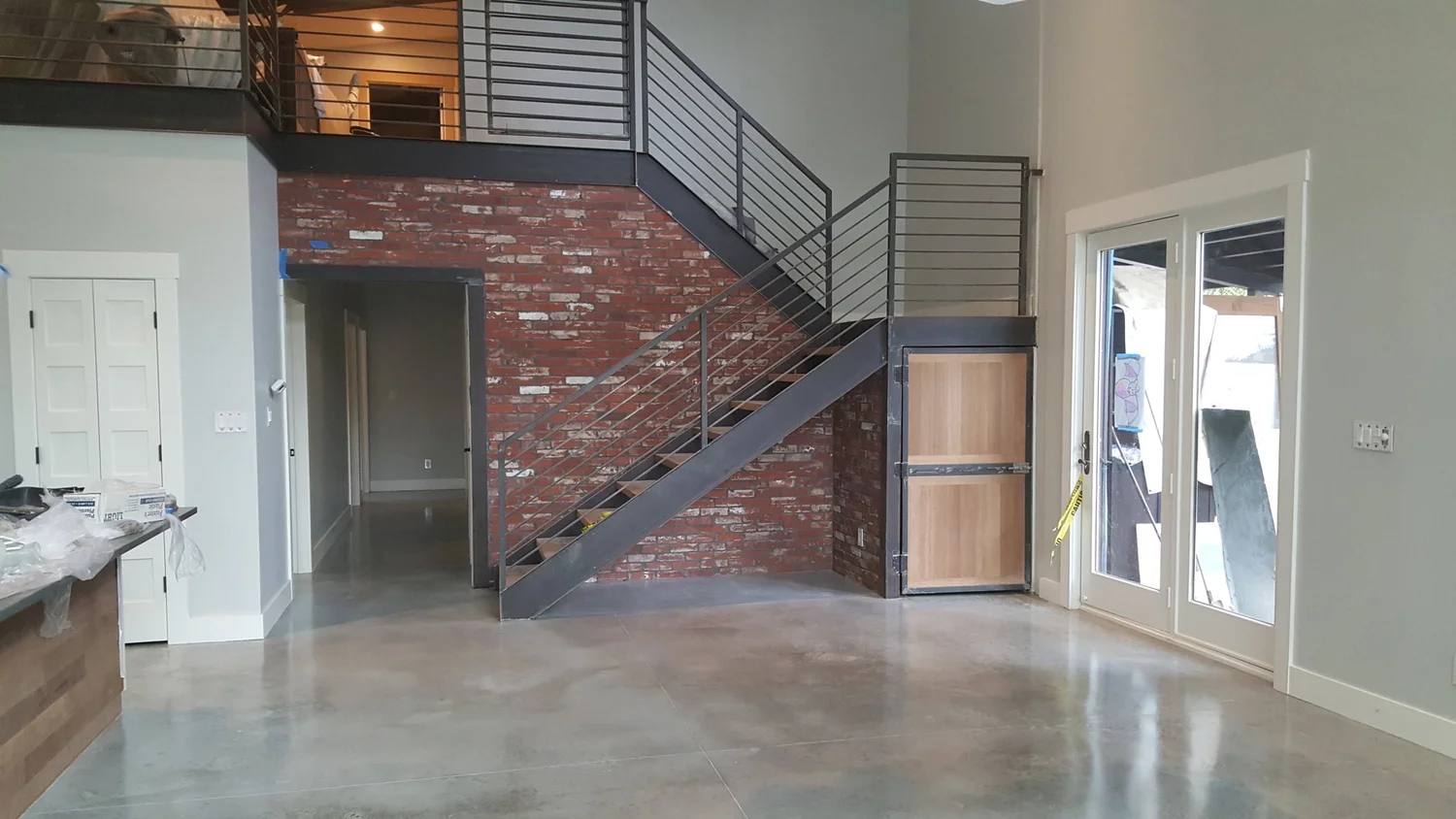
Planning polished concrete into your fall Austin build starts now, while next year’s pours are still on paper. Why now? It isn’t the weather. Almost every choice that shapes how a polished floor turns out gets made before the slab is even finished. Our guide to polished concrete in new construction covers each step.
Once the concrete is down, you’re working with whatever that slab can become, but before it goes down you have a lot more say. That’s why, when we plan polished concrete floors in Austin, we like to get involved before the pour, not after it. The photos in this post are example work photos. They show the kinds of finishes and process we do, not a specific customer’s project.
Why the slab itself matters more than the polishing
People assume the finish comes from the polishing contractor. It doesn’t. It comes from the concrete, and our job is to bring out what’s already there. Four things set the ceiling on your result:
- The mix and the stone in it. If you want to see stone in the floor, the right stone has to sit close enough to the surface for us to reach it without cutting too deep.
- Flatness. A flatter pour means less grinding to level it. It also tends to make a cream finish, where almost no stone shows, look more even.
- Finishing and curing. Concrete that was overworked with the trowel or cured poorly can end up soft or uneven on top, and that shows up as patchy spots after polishing.
- The order of the pour. Seams where fresh concrete met concrete that had already started to set, breaks between pours, and different truck loads can all leave color shifts across a floor.
Get those wrong and no finer grit can fix them later, no matter who does the polishing.
The conversation to have with your builder now
If you do one thing this fall, get your builder and your polishing contractor talking before the pour. Here’s who decides what, and when:
| Topic | Decided by | Timing |
|---|---|---|
| Mix and stone | Builder + concrete supplier | Before ordering |
| How flat the slab should be | Builder + finishing crew | Before the pour |
| How it’s cured, and for how long | Builder | At the pour |
| How much stone shows, and how shiny | Homeowner + polishing contractor | Before the pour, often checked on a sample |
| Slab protection plan | Builder + all trades | Right after curing |
| Polishing window | Builder’s schedule | Late in the build |
Those last two rows are where we see most projects go wrong. Our page on planning polished concrete for new construction walks through that sequence step by step.
Protection is the step everybody underestimates
A new slab sits through months of framing, drywall, painting, and plumbing. By the time we arrive to polish, it often has impact chips, paint splatter, tape glue from the covers, and rust stains from steel left on it overnight.
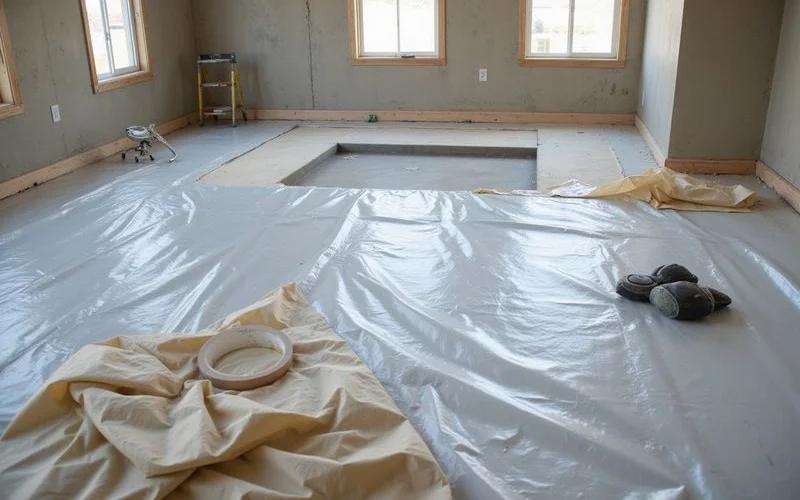
Some of that grinds out. The rest doesn’t, because deep chips and some stains go further into the slab than the grinding depth you agreed on. The fix is boring, but it usually heads off a lot of that damage. Cover the slab with something that won’t leave glue behind, and make protection one named person’s job on the build schedule. When everybody assumes someone else is handling it, nobody is.
A question worth asking your builder
“Who owns slab protection between the pour and the polishing date, and what covering are they using?” If nobody can answer it, you’ve found your risk.
Cure time and the polishing window
A new slab usually needs about 28 days of curing before it’s ready for high shine polishing. The calendar isn’t the only guide, though, so we look at the slab on site before we start and go over timing with you during the consultation. Fall in Central Texas is kind to curing, with mild days and cooler nights, though humidity and how the slab is covered still vary from site to site.
So when should the polishing happen? Polishing late in the build cuts down the protection problem but squeezes the schedule. Going early gives our crew clean access, but then the floor has to survive every trade that follows. Many builds land in the middle: we often polish before the final fixtures go in, and the floor stays covered through the last stages.
Choosing the finish while you still have options
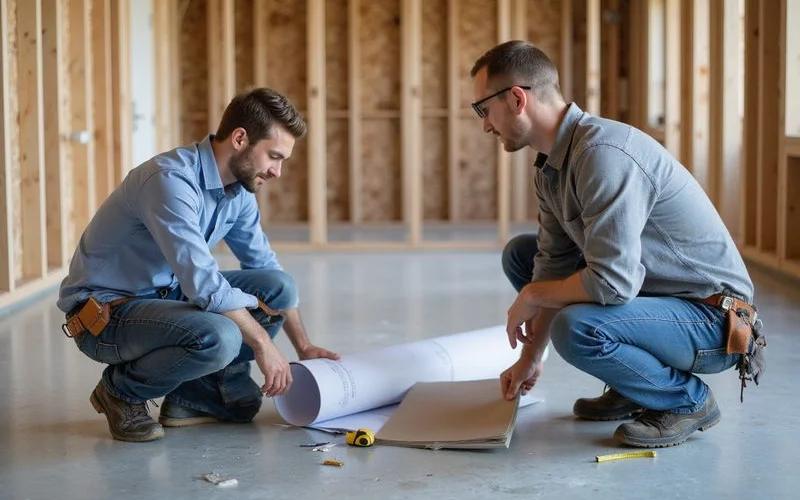
Talk with us about how much stone you want showing before the concrete is ordered, because the mix and the pour shape what you can get. If you want full exposed aggregate, with lots of stone showing, the supplier needs to know. For an even cream finish, flatness is the number that matters most.
You can decide on sheen (how shiny the floor is) later, but it’s worth agreeing on early so nobody gets surprised. Our aggregate exposure guide explains how deep we grind and what stone you end up seeing. The finishes guide shows how each sheen level actually looks in a finished room.
A fall checklist for next year’s slab
If your pour is on the calendar for the next few months, go through this list before the concrete is ordered:
- Make at least a rough call on the look you want: cream, salt and pepper, or exposed aggregate.
- Tell your builder the slab is the finished floor. That changes how the crew handles the pour.
- Agree on the mix and the stone with the supplier based on that look.
- Agree on how flat the slab needs to be and confirm who is finishing the pour.
- Write slab protection into the schedule, with one named person in charge.
- Once the slab has cured, ask us whether a sample on it makes sense, and look at it together if so.
Get those six things right and the polishing usually goes a lot smoother.
Building in Austin next season? See how we plan residential polished concrete
Residential Polished Concrete
We install residential polished concrete in Austin, from remodels to custom builds. When the job calls for it, we grind a sample on your slab before we agree on the finish.
Read the service page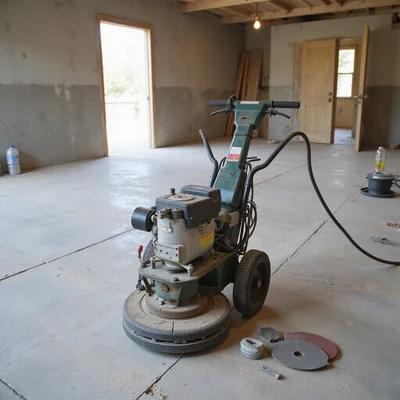
Austin Polished Concrete Floors
Austin, TX
We bring more than 20 years in the concrete trade to polishing jobs for homes and commercial properties across Austin and nearby Central Texas communities. Our installers and estimators add the questions they hear most and what they've learned on job sites.
20+ years in the concrete trade