

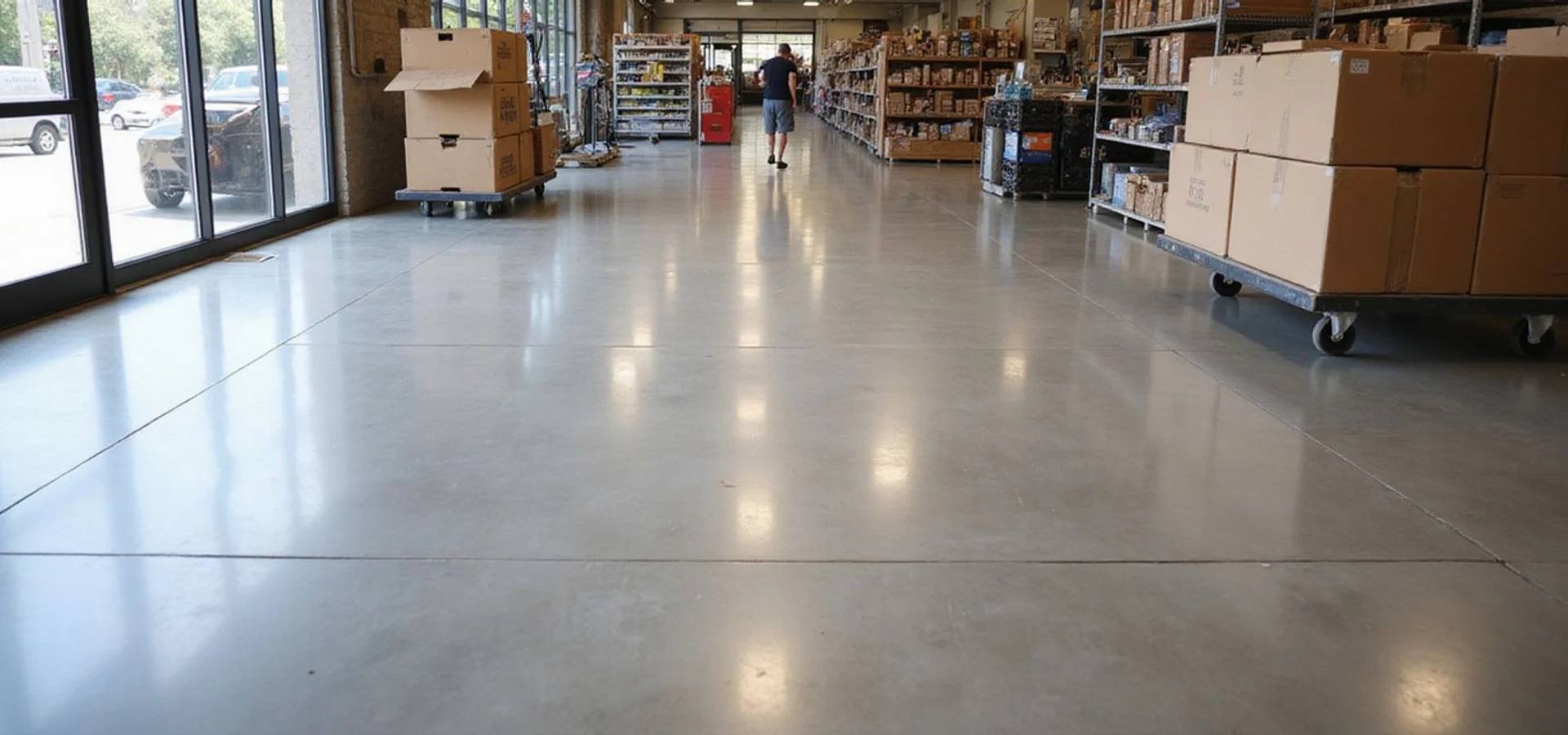
Example work: glossy gray polished concrete floor in a retail store with stocked shelves and boxes

Commercial Polished Concrete for Austin Properties

We install commercial polished concrete in Austin for retail, office, and warehouse spaces, and we plan the work in stages around how your business runs.

  • Local to Austin, 20+ years in the trade
  • We check your slab before we quote
  • Your finish and scope in writing
  • More than 20 years in the concrete trade
  • An estimator reviews your project
  • A written scope for your project
  • Austin and the Central Texas towns we cover
Commercial Questions

Sound Familiar?

Here's what Austin owners and buyers usually ask us before they commit to a commercial floor.

When you're open for business, downtime costs real money

Before our crew shows up, we plan the work zones, the order we do them in, and when we aim to reopen each area.

Vague bids are impossible to compare

A bid that just says "polished to 800 grit" doesn't tell you what floor you're getting. We put it in writing: how much stone shows, the shine we're aiming for, any hardener the job calls for, and how we'll check the finished floor.

Forklift and pallet traffic wears out the wrong floor fast

When the job calls for joint filler or surface hardening, we pick it for the traffic your floor will carry.

Dust and disruption in an occupied building

Depending on the job, we use HEPA dust collection and closed off work zones to help keep the areas next door open while we work.

Whatever the worry, we start the same way: we check the slab first, then recommend the system we think fits it best.

Send us photos of your slab

Why scheduling matters as much as the finish

We work with commercial property managers, warehouse operators, and general contractors across Austin and Central Texas. On a commercial job, the finish is only half the work. The other half is the schedule. We plan who works where and when around your staff and the other trades, and we plan dust control to fit the space.

Polished concrete can hold up well to heavy traffic when it's set up and cared for the right way. That's why so much Austin retail, office, and distribution space runs on it, from Downtown and the Domain to East Austin warehouses. And it's why commercial concrete floors in Austin are a big part of our work. Set it up wrong and it gets expensive: the wrong finish for the traffic, open joints under forklift wheels, or a cleaning plan nobody follows.
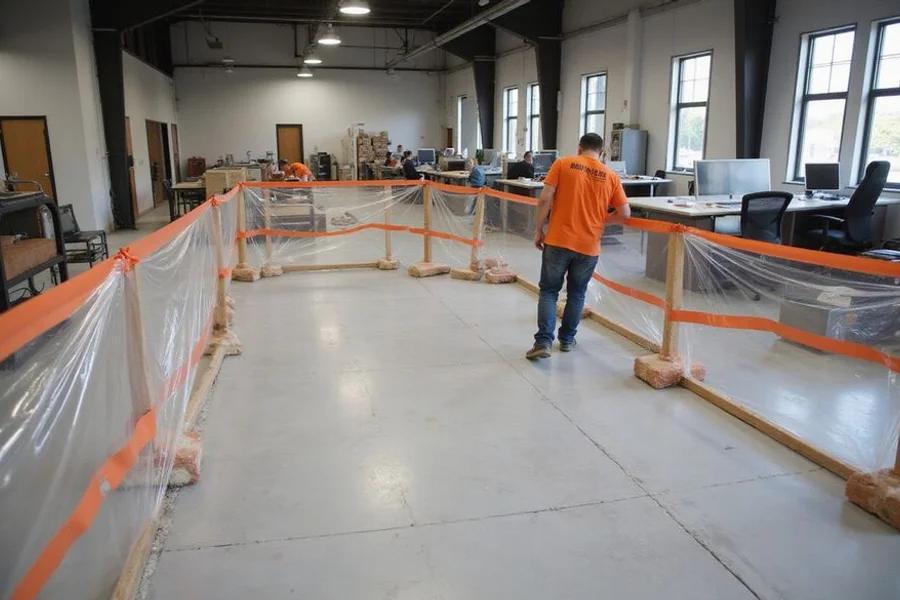
Example work: work zone closed off with plastic sheeting and orange tape inside an open office

We tell you up front how we expect the floor to hold up and what upkeep it will likely need, based on how you use the space. That could be a retail floor in South Congress, an office lobby in Mueller, a restaurant dining room, or a distribution warehouse near the Austin airport.

What types of commercial floors do we polish?

Retail and showroom floors. Looks matter here, and so do your store hours, so we usually work overnight or one department at a time. When the job calls for one, your designer signs off on a sample patch before we touch the full floor.

Office and lobby floors. Everyone sees them, traffic is moderate, and there's often a tenant build out going on with several trades in the building. Getting the order of work right matters more than how fast we grind.

Restaurant and hospitality floors. When we pick the finish, we talk through traction, easy cleaning, and the way the floor handles spills. And the dining room often needs a different answer than the back of house.

Warehouse and distribution floors. From Round Rock logistics parks to East Austin industrial space, the whole conversation is forklift and pallet jack traffic, joint condition, and hardening the surface. How the floor holds up under wheels matters more than how it looks, and you'll find the details in our warehouse concrete polishing guide.

How we spell out a polished concrete floor

A grit number alone doesn't tell you what floor you're getting, so here's what we write down instead:

ElementWhat we put in writing
Stone exposureCream (almost no stone), fine (a salt and pepper look), or coarse (larger stone showing)
Shine levelThe shine level we're aiming for, checked against a sample patch when the job has one
HardenerWhether the job calls for a lithium silicate hardener, which one, and how much
Joint treatmentWhether joints get filled where wheels cross them, and with what filler
Protective coatWhether the floor gets a protective coat, and which one
Sign off termsHow clear the reflection has to be, how much haze is OK, and who makes the call

With all of that on paper, a general contractor can compare bids fairly instead of guessing why one number is lower. Our quote comparison guide covers the same idea from the buyer’s side.

Planning around an Austin building that's open for business

Before we start, we talk through access, power, where the water and waste go, and which areas have to stay open. We also plan how to protect nearby finishes, then put it all in a written plan with target dates and reopening times for each zone.

If the building is still under construction, the risk flips: the trades that come after us can damage the finished floor. Before the first grinder shows up, we agree on how the floor gets covered, who works when, and who's responsible for it. We lay out the full process in our guide to commercial polishing project planning.

We walk you through floor care when we finish

Mop a commercial polished floor with the wrong cleaner for two years, and it usually won't look the way it did when we finished. When the job is done, we walk you through care, cure times, and upkeep in person. For most busy floors, that means daily dust mopping or auto scrubbing, weekly neutral pH cleaning, and regular high speed buffing. We also point out the signs that the floor may need more hardener or a professional repolish, and we're available after the job if you have questions or concerns. Our commercial maintenance schedule guide goes into more detail.

What drives cost on a commercial floor?

As of 2026, commercial quotes vary more than residential ones, because working around an open business adds labor and setup time.

Prep work. Old coatings, glue left from past build outs, and damage from racking all add time before polishing starts.

Joint treatment. Where wheels cross the saw cut joints in the slab, we often fill them with a firm polyurea filler, depending on the slab and the traffic. The more joints you have, the more that line on the quote costs.

Phasing. When we work an open building in zones, we set up again and again, close off each zone, and work to blend the edges where zones meet. That's often the biggest price difference between an empty build out and an open building of the same size.

Working hours. Nights and weekends usually cost more than weekday work, but they can save you more than that in lost sales.

Finish choice. The stone exposure and shine level you pick affect how many passes we make, and on a big floor those small differences add up fast.

We list each of these on its own line in our quote, so you can see where the money goes. It's the same idea as our quote comparison checklist.

How we compare

FeatureTypical providerAustin Polished Concrete Floors
How the finish is spelled out“Polished to 800 grit”Stone exposure, shine level, any hardener, and how we check the finished floor, all in writing
Work zone planOften worked out on the dayWritten before we show up, with target dates and reopening times for each zone
Dust containmentOften sold as an extraDust control planned for your building, often with HEPA dust collection
Cleaning planOften a few care tips on the way outWe walk you through daily, weekly, and periodic care in person when we finish

Paperwork ready for your contractor's submittal

For general contractors and the people who write specs, we can put together what a submittal package usually needs. That can cover how much stone shows (the aggregate exposure class), the shine level, and any hardener, joint filler, or protective coat. It can also cover any sample patch, who approves it, and how we'll check the finished floor.

If a designer or architect has already written a spec, we look at it against what we think the slab can do and flag problems before we price it. We'd rather raise it now than price a spec nobody can hit and argue about it later.

When a different floor fits better

Some spaces need a floor that resists chemicals, has no seams, curves up the wall, or lets nothing soak in. Think of certain kitchens, labs, and wash down areas, where an epoxy or other resin coating may be the better pick. If the slab is weak, heavily patched, or cut up by past build outs, a polishable overlay may give you a better floor than grinding what's there. We'll tell you which one we think fits your building before you commit.

Every project starts with an on-site evaluation. Actual scope, pricing, and expected results depend on your specific substrate condition, environment, and project requirements. The website describes our services in general terms. Your signed proposal governs the actual work.
Differentiators

Why Choose Us for Commercial Floors

The schedule is part of the job

We plan access, work zones, and target reopening times up front, because downtime costs an open business real money.

We work with your GC and facility team

We work alongside the other trades, show up to coordination meetings, and plan our work around theirs to keep the job moving.

A real spec, not a sales pitch

Stone exposure, shine level, any hardener or joint filler, and sign off terms, written up for your submittal.

Dust control planned for your space

Depending on the job, we use HEPA dust collection on the grinders and close off work zones to help the areas next door stay open.

Set up for the traffic it will see

A distribution floor and a showroom floor need different hardening, joint work, and upkeep. We don't set them up the same way.

Care walkthrough when we finish

We walk your cleaning crew through daily, weekly, and periodic care in person, because upkeep has a lot to do with how the floor looks in year three.

Process

How Our Commercial Work Runs

  1. 1

    Scope and site walk

    Floor area, slab history, traffic type, joint condition, and the limits your business puts on when and where we can work.

  2. 2

    Work zone plan

    Work zones, the order of work, after hours windows, and the path our equipment and waste will take through the building.

  3. 3

    Sample patch and sign off

    When the job calls for one, you approve a sample patch of the finish. We agree in writing how we'll judge the finished floor, and both sides check it against that.

  4. 4

    Prep work and joint filling

    We strip old coatings or glue, then handle crack repair and joint filling as the slab and the scope call for.

  5. 5

    Grind, harden, polish

    We grind toward the agreed stone exposure, harden the surface when the job calls for it, and polish toward the agreed shine. Passes and dust control depend on the slab and the system.

  6. 6

    Reopening and handover

    We aim to reopen each zone on the target date. When the job is done, we walk you through care, cure times, and upkeep in person.

Need a floor specified for a submittal, not just a quote?

Send your floor area, traffic type, and any existing spec. One of our estimators usually looks at it within 24 business hours.

Finish Library

What Commercial Floors Look Like

These are example work photos. They show the kinds of finishes and process we do, not a specific customer's project. We add real photos to our project library as we write up jobs, with each customer's permission.

Results vary by substrate condition, prep requirements, environment, and product selection.

Feedback

What Our Customers Say

Here's what some of our customers have said.

“As a commercial GC, it's rare to find a flooring trade in Austin that explains the prep and testing this well. They kept us updated on the schedule the whole way through.”
Travis B. Austin
“Honest and straightforward. They tested our 1980s slab, showed us a sample mockup, and explained why polishing suited our open living space better than epoxy.”
Sarah L. South Congress, Austin
“We removed dated tile in our Barton Creek remodel. The team prepped the uneven slab, walked us through our options, and we ended up with a satin cream finish we really like.”
David & Michelle R. Barton Creek, Austin

Individual results vary based on use, maintenance, and environmental conditions.

Got Questions?

Commercial FAQs

Can you polish our floor without closing the business?

Usually, yes. Depending on the job, we can split the floor into work zones, close off each one, and work outside your business hours. We agree on the plan before we show up, so you know which areas we'll close off and when.

How soon can the floor carry traffic again?

That comes down to the scope and whether we put down a protective coat. A floor that's just polished and hardened can usually take traffic soon after our last pass. A protective coat adds drying time, so we go over the expected timing during the consultation and put it in the written plan.

How do you control dust in an occupied building?

Depending on the job, we run HEPA dust collection on the grinders, close off each work zone, and protect the paths in and out. We plan dust control with you during the consultation, and your signed proposal spells out what's included.

Do warehouse floors need joint filling?

Often, yes, where hard wheels cross the saw cut joints in the slab. When the job calls for it, we fill them with a firm polyurea filler that supports the joint edges and helps cut down on chipping. We look at the joints on the site walk and go over them during the consultation.

Can polished concrete handle forklift traffic?

In many cases, yes, when it's set up and cared for with that traffic in mind. A hardener can toughen the surface, joint filler helps protect the edges, and regular cleaning helps it hold up. We'll tell you if we think your slab isn't a good fit.

What about slip resistance in a retail or restaurant space?

We talk through traction for how people use the space, including wet areas and entries. Traction depends on the finish, what's on the floor, and whether it's wet. No floor is slip proof, and we'll go over your options during the consultation.

How do you specify the finish for a submittal?

We write it up by stone exposure and shine level, not just a grit number, and tie it to a sample patch when the job has one. We also agree in writing how we'll check the result, including how clear the reflection is and how much haze is OK.

What maintenance does a commercial polished floor need?

In busy areas, plan on dust mopping or auto scrubbing daily, cleaning weekly with neutral pH products, and buffing every so often. Floors that take a beating may need another coat of hardener over time. When the job is done, we walk you through care for your traffic in person, and we're available after the job if you have questions.

Still have a question about your floor?

Send it our way, with photos if you have them. We'll get back to you as soon as we can with a straight answer, whether or not you hire us.

Get My Commercial Polishing Quote
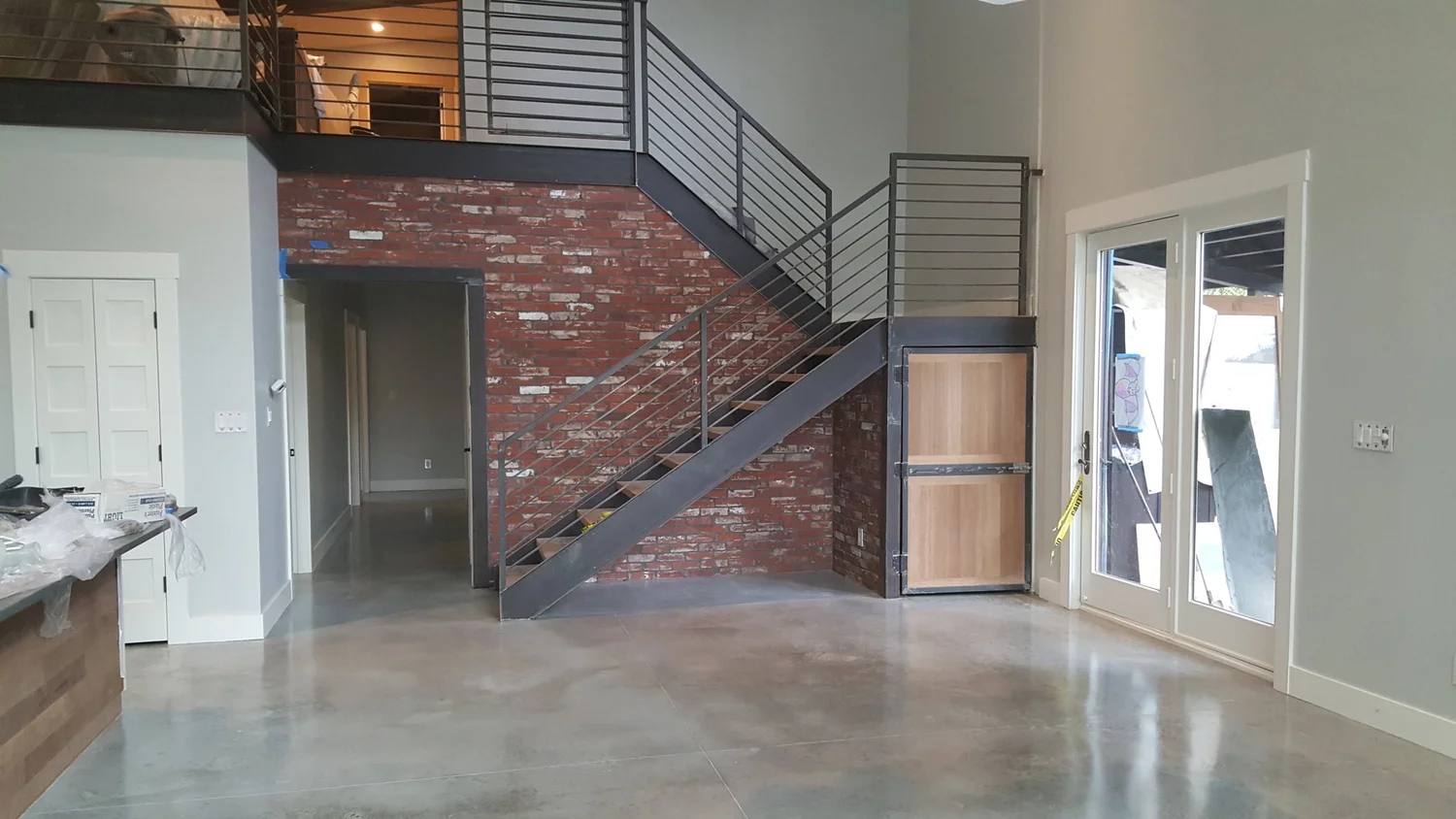
Reflective gray polished concrete floor in a new home beside a brick wall and metal staircase
An estimator reviews your project

Ready to talk about your commercial floor?

Send a few slab photos and your floor area. We'll look them over and let you know what we'd want to check on site.

  • We check your slab before we quote
  • Your signed proposal spells out what's not included
  • We walk you through care in person when the job is done
(737) 788-SLAB Request a Quote