

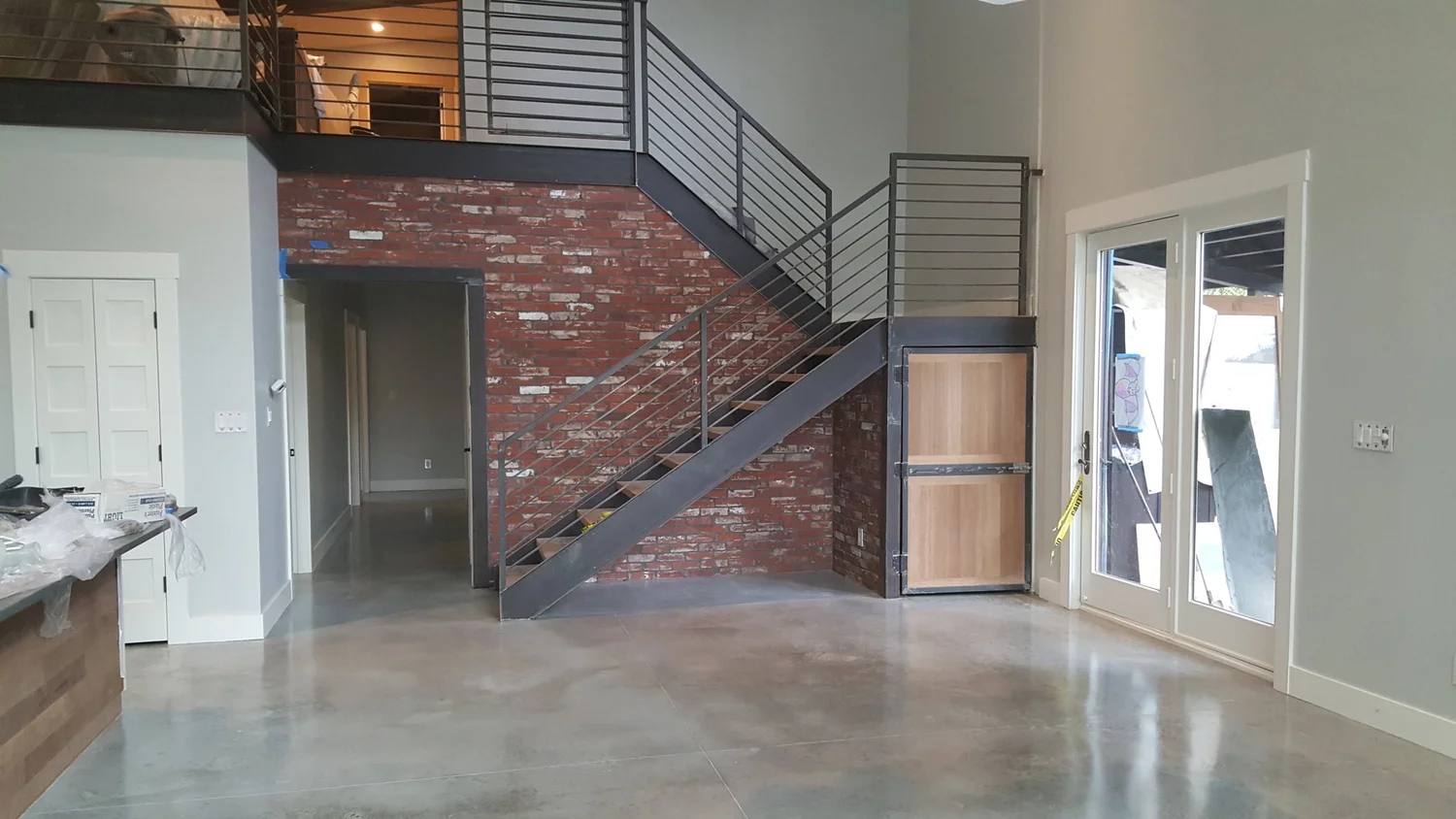
Reflective gray polished concrete floor in a new home beside a brick wall and metal staircase

Residential Polished Concrete Floors in Austin

We install residential polished concrete in Austin, from remodels to custom builds. When the job calls for it, we grind a sample on your slab before we agree on the finish.

  • Local to Austin, 20+ years in the trade
  • We check your slab before we quote
  • Your finish and scope in writing
  • More than 20 years in the concrete trade
  • An estimator reviews your project
  • A written scope for your project
  • Austin and the Central Texas towns we cover
Residential Questions

Sound Familiar?

Here's what Austin homeowners usually ask us before they commit to polished concrete.

You don't know what's under the tile or carpet

Ridges of tile mortar (thinset), carpet tack holes, and old glue are common on Austin remodel slabs. That's why we often grind a test area before we agree on a finish.

Worried concrete will feel too hard or cold for a family home

Concrete is hard underfoot, and we'll tell you that straight. Rugs, radiant heat, and choosing which rooms get polish and which get carpet all help.

Choices on a new build feel permanent

The mix, flatness, and curing all get decided before the pour. When you bring us in early, we can work with your builder so those decisions help the finished floor instead of holding it back.

Your slab may not match the photo you found

Color and stone vary from slab to slab. When the job calls for it, we grind a sample on your own concrete and work toward your photo as far as that slab allows.

Whatever the worry, we start the same way: we check the slab first, then recommend the system we think fits it best.

Send us photos of your slab

Polished concrete in an Austin home

We work with homeowners, remodelers, and custom home builders in Austin. Polished concrete floors in Austin usually hold up well with regular care, clean easily, and have a look all their own, from Westlake ranch homes to East Austin bungalows. They tend to handle Austin dust, pets, and constant trips in and out better than most softer floors. And unless you add a protective coat, there's no film to peel or lift at the edges.

There are two ways to get there, and they're very different jobs. Redoing an existing slab means working with concrete that was poured to hold up the house, not to look good, and it's often been covered for decades. On a new build, we get a say in the pour itself, which can give you more control over how the floor turns out.
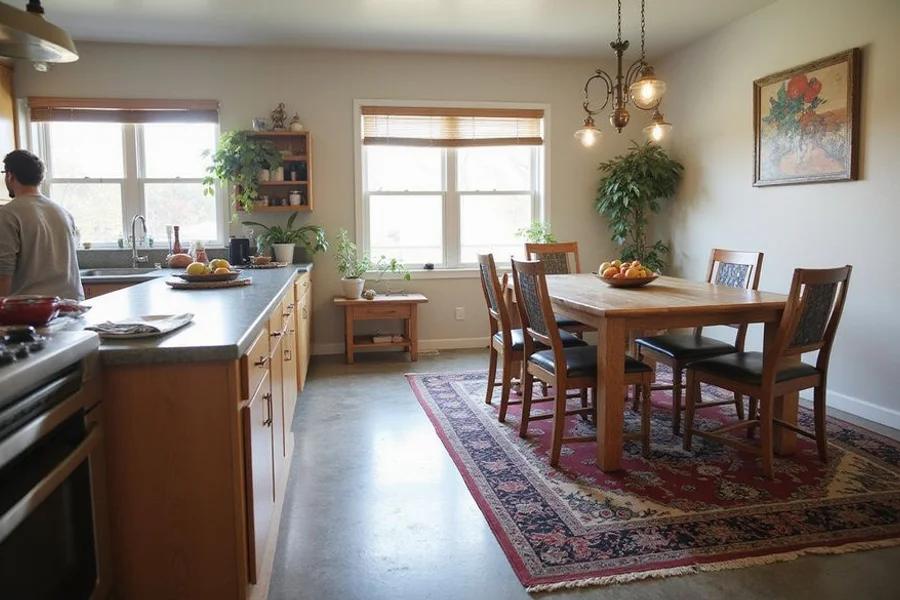
Example work: kitchen and dining area with a soft sheen concrete floor and a patterned rug

Either way, we usually show you samples or a mockup before work starts, so you have a realistic idea of looks, comfort, and upkeep. A patch ground on your own slab tells you more than any gallery photo.

Austin remodel slabs: what to expect underneath

Most Austin remodel slabs we see have a history. South Austin and the central neighborhoods have lots of homes built on a slab at ground level from the 1960s through the 1980s. Decades of flooring changes leave their mark.

Tile leaves thinset ridges and ghosting, a faint outline of where the tiles sat. Carpet leaves tack holes around the edges of the room and sometimes glue across the middle. Plumbing and electrical work leaves trench lines patched with a different mix, and those will always look different after polishing.

None of that automatically rules out polishing. A salt and pepper finish is usually forgiving, because an even scatter of fine stone tends to pull the eye away from small flaws. But the usual order is to pull up the flooring, grind a test patch when it helps, look at it together, then decide. Our guide to polishing concrete after tile or carpet removal covers the details, and so does our page on whether existing concrete can be polished.

If the slab is too damaged, too soft, or too patched, we can put down a polishable overlay. That's a fresh, even layer we then grind and polish, and it's a real option, not a consolation prize.

New builds: decisions that happen before the pour

If your slab hasn't been poured yet, you get a say in things that can't be changed later:

  • Mix and aggregate: the stone in the concrete decides what an exposed aggregate finish can look like.
  • Flatness: a flatter pour usually gives a more even cream finish and can cut down on grinding.
  • Curing: a new slab usually needs around 28 days to cure before we harden and polish it.
  • Protection: framing, drywall, and paint crews can easily damage a bare slab. Covering it and scheduling the trades in the right order can prevent most of that.

We can work with your builder on those points and check on site whether the slab is ready. The full checklist is in our guide to planning polished concrete for new construction.

Side by side, the two routes differ on almost every choice that matters:

DecisionExisting slab (remodel)New pour (build)
Stone and colorSet by whatever was poured. A test grind shows itChosen in the mix before the pour
FlatnessWe work with what's there. Big dips and humps add grindingControlled by the finishing crew
Prep workTile, carpet, glue, and old sealers come up firstVery little. Protecting the slab matters more than removing anything
RepairsTrenches, tack holes, and patches are normal and visibleUsually few, if the slab is protected while the house goes up
How certain the finish isYou only know once we grind a test areaEasier to predict from the chosen mix and a sample
Schedule riskNobody knows what's under the flooring until it comes upCuring time (around 28 days) sets the schedule

Choosing a finish you'll still like in five years

Our most common piece of advice: pick the finish for the room, not for the photograph. A high gloss cream floor in a sunny open plan room shows every footprint, and it needs a cleaning routine some households don't like. A satin salt and pepper floor in the same room tends to hide everyday wear and still looks sharp.

Shine and stone exposure are separate choices, and you should see both under your own light before you decide. Our aggregate exposure guide shows how deeper cuts bring out larger stone, and our finishes guide shows each level of shine in a room people actually live in.

What drives cost in a residential concrete project

We quote each project instead of posting a rate. Two floors the same size, in Austin, Round Rock, Cedar Park, or Lakeway, can need very different amounts of work. In a home, four things move the price.

What has to come up first. Carpet comes up quickly. Vinyl and its glue take longer, and ceramic tile on a full thinset bed is the slowest of all. We find two layers of it in a surprising number of Austin homes.

What the slab needs. Any crack repair, tack hole filling, trench patching, or work on a soft top layer happens before we start polishing.

How the house is laid out. Six small rooms with doorways and closets usually cost more per square foot than one open room. Edges and moving our machines eat up a lot of the time.

The finish you choose. More stone means more cutting passes, and more shine means more polishing passes. Color and protective coats are extra steps on top.

The full breakdown is in our Austin polished concrete cost guide. To compare quotes fairly, use the checklist in our guide on how to compare polished concrete quotes.

When another floor suits a room better

We'd rather tell you this when we look at the slab than have you find out afterward.

If comfort underfoot matters most in a bedroom, we'll tell you to go with wood or a floor that has some give. A bathroom that gets wet a lot isn't an automatic yes, so we'll talk through traction and how the room gets used. And if the slab under your old floor turns out to be in rough shape, a polishable overlay may serve you better than grinding the original. Polished concrete works well in most of an Austin home, but not in every room. We'll give you our honest take on which is which.

How we compare

FeatureWhat We Often See ElsewhereOur Approach
Slab assessmentA quick look or photosA diamond test grind on your own concrete when the slab calls for it
Picking the finishPhotos, brochures, or online galleriesA sample or mockup on your actual slab when the job calls for one
The quoteA verbal or generic estimateWritten scope showing what's included and what's not
Talking about comfortPolished concrete pitched for every roomHonest about where carpet or wood suits better
Track recordVariesMore than 20 years in the concrete trade

Living with a polished concrete floor

Everyday care is dust mopping, plus a damp clean now and then with plain water or a pH neutral cleaner. No waxing, no stripping, and usually no annual recoat. We do ask you to wipe up acidic spills like wine, citrus, and some cleaning products right away, because acid etches concrete no matter how well it's polished.

Concrete doesn't give underfoot, and we won't pretend otherwise. Rugs where you sit and a mat at the door help, and it's good to know a big open room will echo a bit. Small things like that separate a floor people love from one they just put up with.
What's different

Why Choose Us for Residential Polished Concrete

Looks get their own conversation

In a home, how a floor looks and feels matters as much as how it holds up. We plan it that way instead of copying a commercial job.

Honest about remodel slabs

We point out the tack holes, tile ghosting, trench repairs, and color differences we can see before work starts, instead of explaining them away afterward.

You approve the look before we start

You sign off on the finish before we start, usually from a sample we grind on your own slab. That way you have a realistic idea of the look going in.

We work with your builder

On new builds we'd rather talk to your builder about mix, flatness, curing, and slab protection before the pour, not after.

We talk openly about comfort

Concrete is hard underfoot. We'll cover rugs, echo, and when another floor might suit a bedroom better.

Care that suits a home

Dust mopping and a pH neutral cleaner handle the everyday care, with no waxing or stripping. When the job is done, we walk you through care, cure times, and upkeep in person, and we're available after the job if you have questions or concerns.

Process

How a Home Project Usually Runs With Us

  1. 1

    Get to know the room

    We ask how you use the space, what furniture sits there, and where the light falls. We also check how high the finished floor can sit at doorways and where it meets other floors.

  2. 2

    Check the slab

    On a remodel, we look under the existing floor. On a new build, we go over the plan for the pour, curing, and protection.

  3. 3

    Grind a test area if needed

    When the slab calls for it, a small ground patch on your own concrete shows the real stone, color, and any tile ghosting before you commit.

  4. 4

    Pick the stone and the shine

    Cream, salt and pepper, or exposed aggregate. Matte, satin, or gloss. You decide by looking at the real thing, not a brochure.

  5. 5

    Written scope and planned schedule

    We write down the prep, repairs, finish, any coatings, the order of the rooms, and what's not included.

  6. 6

    The work, then a care walkthrough

    Dust control depends on the job, and it often means closed off work areas and dust extraction. When we're done, we walk you through care, cure times, and upkeep in person, and we're available after the job if you have questions.

Remodeling or building new? Let's look at your slab.

Send your floor area, how you use the home, and slab photos, or your pour date if it's a new build. One of our estimators usually looks it over within 24 business hours.

Finish Library

What Polished Concrete Looks Like in a Home

These are example work photos. They show the kinds of finishes and process we do, not a specific customer's project. We add real photos to our project library as we write up jobs, with each customer's permission.

Results vary by substrate condition, prep requirements, environment, and product selection.

Feedback

Feedback on Our Residential Work

Here's what some of our customers have said.

“We removed dated tile in our Barton Creek remodel. The team prepped the uneven slab, walked us through our options, and we ended up with a satin cream finish we really like.”
David & Michelle R. Barton Creek, Austin
“Honest and straightforward. They tested our 1980s slab, showed us a sample mockup, and explained why polishing suited our open living space better than epoxy.”
Sarah L. South Congress, Austin
“As a commercial GC, it's rare to find a flooring trade in Austin that explains the prep and testing this well. They kept us updated on the schedule the whole way through.”
Travis B. Austin

Individual results vary based on use, maintenance, and environmental conditions.

Got Questions?

Residential FAQs

Can the slab under our tile or carpet be polished?

Often, yes. We usually pull up the glue, thinset, and tack strips first, then grind a test area when it helps, so you can see the real concrete. How it turns out depends on the slab's condition, how deep the stone sits, and past repairs, and sometimes a polishable overlay gives a better result.

Is polished concrete too hard or cold for a family home?

It's hard, and it does feel cooler than wood or carpet, so rugs help in living areas. Some homeowners add radiant heat, and others just like how cool it feels in an Austin summer. For bedrooms, we'd ask whether comfort or toughness matters more to you.

Will our floor look exactly like the photo we found?

Not exactly. Concrete is a natural material, so color, stone, and how it was troweled vary from slab to slab, and even within one pour. When the job calls for it, we work toward your photo with a sample on your own concrete, so you can see what's realistic before we start.

What happens to cracks and patch repairs?

Depending on the crack and the slab, we usually fill cracks before polishing. Repairs usually still show, because the filler isn't the same as the concrete around it. Central Texas clay moves, and that can open a crack back up. We tell you that before we start.

Can we polish only part of the house?

Yes, and lots of our clients do. A common split is polished concrete in the living areas and kitchen, with carpet or wood in the bedrooms. We plan where the floors meet and how high each one ends up, to help the doorways line up.

How disruptive is the work?

You'll need to clear the furniture out of the rooms first. Depending on the job, we close off the work area and run HEPA dust extraction on the grinders. We usually work room by room, so you can keep using part of the house if the layout allows.

Do polished concrete floors need sealing every year?

No. Polishing and hardening don't leave a film that needs stripping or recoating each year. If you chose a protective coat, busy spots can get a fresh coat when they wear. Otherwise, regular dust mopping and a pH neutral cleaner usually keep it looking good, with a high speed buff now and then if the shine dulls.

We're building a new home. When should we bring you in?

Before the slab is poured, if you can. The concrete mix, flatness, curing time, and protecting the slab from other trades all affect what the finished floor can be. Call us in early and we can help head off problems that can't be ground out later.

Still have a question about your floor?

Send it our way, with photos if you have them. We'll get back to you as soon as we can with a straight answer, whether or not you hire us.

Get My Residential Polishing Quote
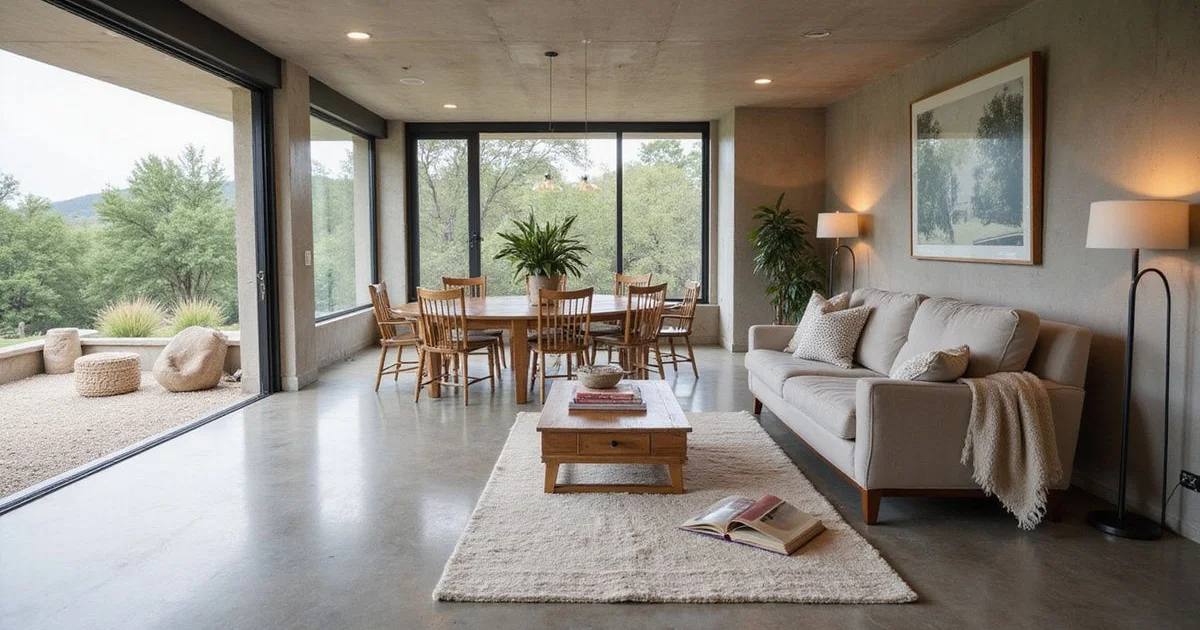
Example work: living and dining room with a satin gray polished concrete floor, sofa, and rug
An estimator reviews your project

Ready to talk about polished concrete for your home?

Send a few slab photos and your floor area. We'll look them over and let you know what we'd want to check on site.

  • We check your slab before we quote
  • Your signed proposal spells out what's not included
  • We walk you through care in person when the job is done
(737) 788-SLAB Request a Quote