

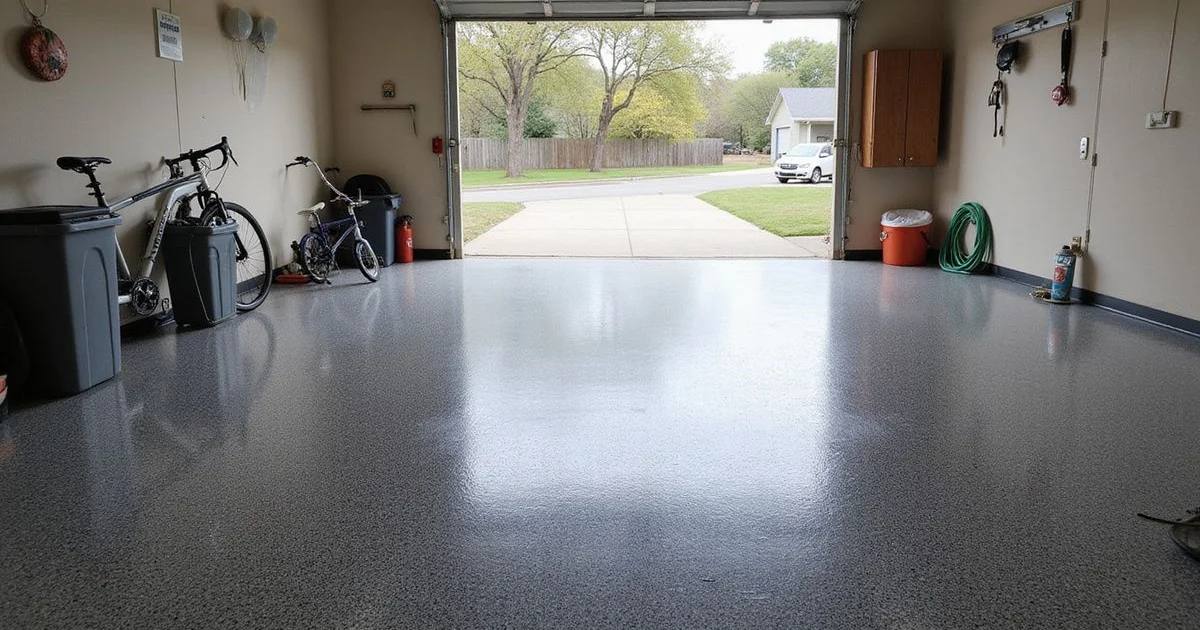
Why garages are a coating job, not a polishing job
Polishing is our specialty, but in garages we often recommend a coating instead. For garage floor epoxy in Austin, that tends to mean a flake system with a polyaspartic topcoat. Garage slabs deal with car fluids, road salt in the rare Texas freeze, hot tires, dropped tools, and grit tracked in from outside. A sealed coating usually handles all of that better than bare or polished concrete.
Garage coatings are part of our epoxy flooring work, and this guide covers what a proper system involves.
How a flake system is built
Here's how we build a typical garage system:
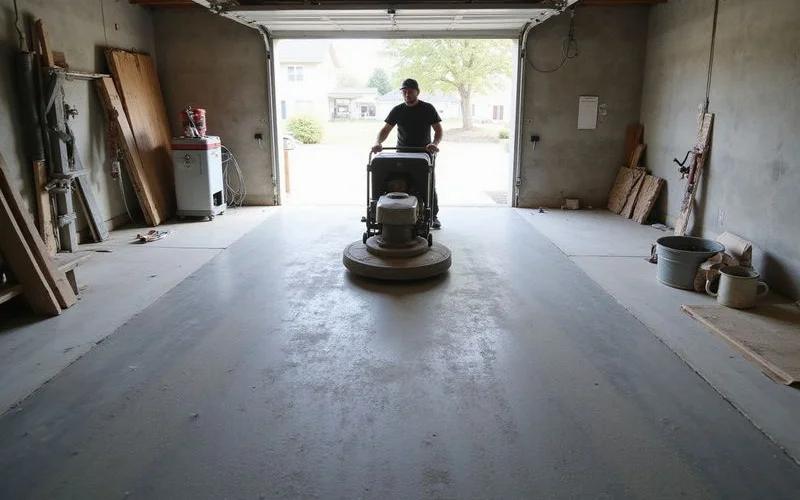
- Grinding. We usually grind the slab to the roughness the coating needs to grip. Dust control and repairs to cracks, pits, and chipped spots depend on the slab, and we go over them during the consultation.
- Primer or base coat. This goes straight onto the ground concrete, and if a moisture test calls for it, we may use a primer made to hold back moisture.
- Flakes. We toss vinyl chips into the wet base, and for full coverage we keep going until it can't hold any more. For a lighter look, we scatter fewer.
- Scrape and vacuum. We scrape off loose flake and knock down the high points so the topcoat lies flat.
- Topcoat. One or two coats of polyaspartic or urethane go on last, and this is the layer that takes most of the wear and sun.
The flake isn't just for looks. It can add a little texture for grip, and it tends to hide dust and small marks better than a solid color. That's why we like it for garages.
Epoxy and polyaspartic: the real difference
| Property | Epoxy | Polyaspartic |
|---|---|---|
| What it usually does | Base coat, sticks to the concrete | Topcoat, takes the wear |
| How fast it cures | Slower, hours between coats | Fast, can often recoat the same day |
| UV stability | Many turn amber in sunlight | Usually UV stable |
| Holds up to scuffing | Good | Better |
| Time to work with it | Forgiving | Short, so it needs a skilled installer |
Most good systems use both: epoxy to grip the concrete and build thickness, polyaspartic for the surface you walk and drive on. When someone sells a “polyaspartic floor,” there's usually still an epoxy or primer base underneath.
Prep, and why you can't skip it
Most failed garage coatings we get called to look at let go where they meet the concrete, and the usual reasons are these:
- Acid etching instead of mechanical grinding
- Coating put over an old sealer that was never taken off
- Nobody tested the slab for moisture first
- Oil not fully cleaned out of the parking spot
- Product put down when it was too hot or too cold
Grinding is noisy, dusty work that usually takes us about a day on a typical garage, depending on the slab. It's also the step that does the most to help the coating stay bonded.
Hot tire pickup, explained
A tire heats up on the road, then cools and shrinks while parked. If the coating's grip on the concrete is weaker than the tire's grip on the coating, the tire pulls it up. Good prep and the right topcoat go a long way toward preventing it. A thin DIY kit over an acid etched slab often doesn't.
What to expect in an Austin garage
Heat. A closed garage in July gets hot, so we plan the timing and pick the product with that in mind.
Sunlight at the door line. The first few feet inside the door see direct sun. A UV stable topcoat helps keep that strip from turning a different shade than the rest of the floor.
Slab condition. Many garage slabs have cut joints, cracks from shifting soil, and a slope toward the door. When the job calls for it, we repair cracks before coating, though cracks from shifting soil can open again. The slope stays, because it's there for drainage.
Cure before use. You'll wait longer to drive on the floor than to walk on it, and we put estimated times for both in the scope. When the job is done, we walk you through care, cure times, and upkeep in person. Driving on it too early is a common way to ruin a good job.
Store bought kits versus an installed system
Weekend kits aren't the same kind of product, and it's worth knowing the difference before you compare prices.
Prep. Kits usually come with an acid etch. Acid roughens the surface a little, but not the way grinding does, and most coatings grip better on ground concrete. It also leaves residue you have to neutralize and rinse off. We usually grind instead.
Solids content. Many kits are water based with low solids, so the layer left once it dries is thin. An installed 100% solids epoxy usually leaves a much thicker, tougher layer.
Topcoat. Kits often stop at the base coat with a light sprinkle of flake. But wear, chemical, and sun protection all come from the topcoat. That's where the money goes in a professional system.
Waiting for it to cure. With a kit, it's easy to rush the wait times to get your garage back by Monday.
That doesn't make kits worthless. For a lightly used garage on a small budget, one can look fine for a few years. It does mean a kit price and an installed quote are prices for two different products.
Care and realistic lifespan
Sweep or dust mop often, since grit does most of the scratching. Clean with a mild cleaner, not a harsh solvent. Put a mat where you park if you often pull in with hot tires after a long drive, and wipe up fluid spills instead of leaving them.
How long it lasts comes down to the system, the prep, and how you use the garage. With good prep, a proper topcoat, and regular care, a garage floor typically lasts a long time in normal home use. The same product over a badly prepped slab may not last two summers. We'll tell you what would shorten the life of the system we suggest, instead of quoting one number for every garage.
Every project starts with an on-site evaluation. Actual scope, pricing, and expected results depend on your specific substrate condition, environment, and project requirements. The website describes our services in general terms. Your signed proposal governs the actual work.
For more on coating systems and their limits, see epoxy flooring uses and care.