

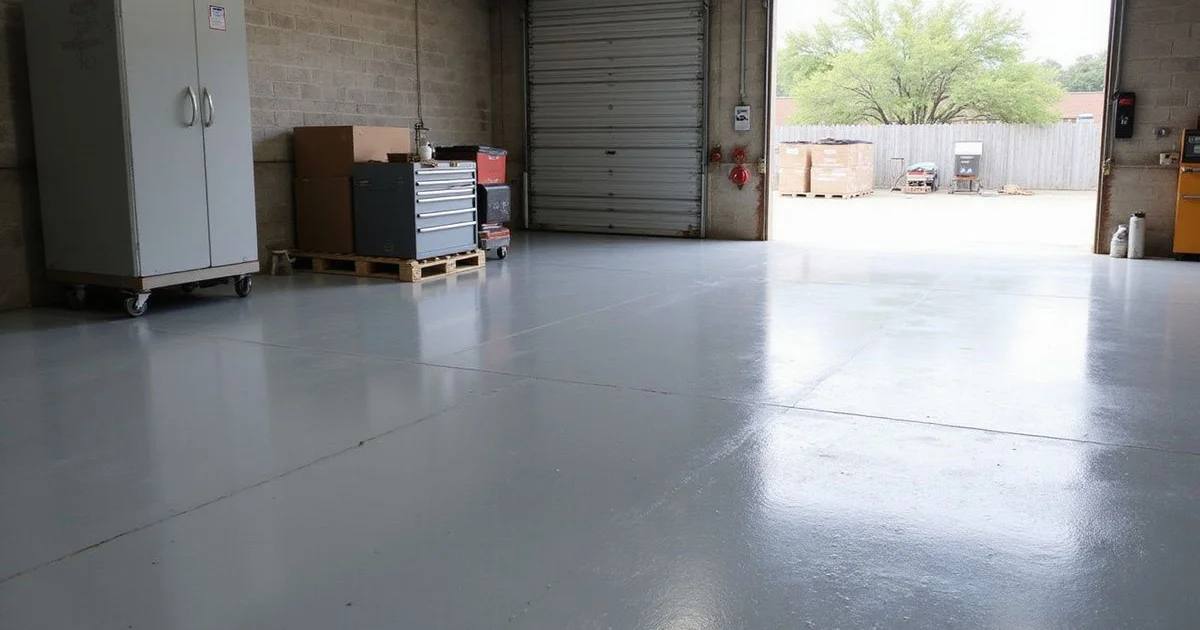
Most coating jobs we quote start with someone asking for “standard epoxy,” but few facility managers or homeowners know how much that one word covers.
That confusion is why some epoxy floors hold up for many years and others fail within months. This guide covers epoxy flooring pros and cons: what the materials really do, where they fall short, and how to look after them.
What “epoxy flooring” actually covers
Epoxy flooring is a coating that bonds to concrete once the surface is roughened, usually by grinding. It sits on the slab as a protective layer without changing the concrete itself.
That's the big difference from polishing, and it's why the two age so differently. The word epoxy also covers a huge range of products. A thin garage kit with one coat might be only 3 to 10 mils thick, and a mil is a thousandth of an inch. Industrial systems made with 100% solids resin and a urethane top layer can run 125 mils or more.
Both get sold as “epoxy,” but they're nowhere near each other in how long they last. Our epoxy flooring quotes name the system we're proposing and its planned thickness. For the home end of that range, see our guide to garage epoxy flake and polyaspartic coatings. Know the thickness you're paying for, so you don't overpay for a thin, weak floor.
Rough thickness ranges you'll see, though they vary by maker:
- Thin coat systems (3 to 10 mils): Best for light home use and foot traffic.
- Thicker multi coat systems (20 to 40 mils): Good for medium commercial use.
- Heavy duty systems (125 to 250 mils): Built for rough industrial use and heavy forklifts.
How a system is built
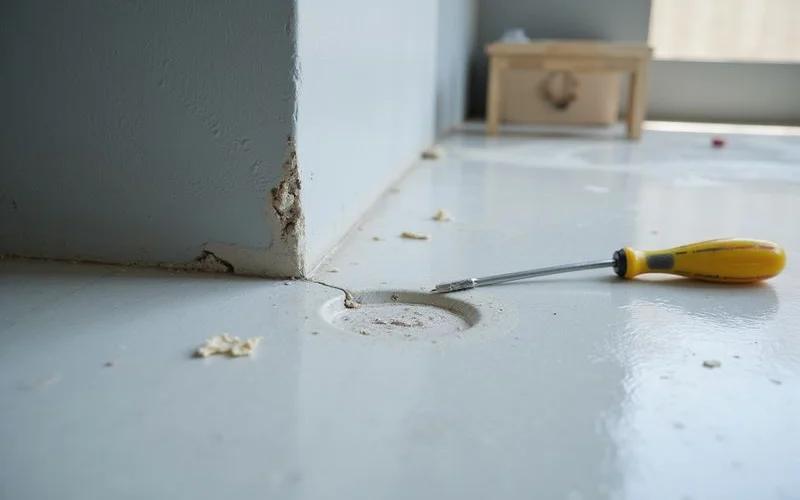
Most commercial epoxy floors are built in layers, and each layer has its own job. Skip one and the whole floor is weaker, so we follow the layers the system calls for.
The layers that matter
- Primer: It bonds straight to the concrete once the surface is prepped. If a moisture test on your slab comes back high, the floor needs a primer made to hold back moisture. The ASTM F2170 probe test is one common way to check.
- Base coat: This is the main body of the floor. It can be tinted when you want a solid color.
- Broadcast: In broadcast systems, vinyl flake or quartz gets scattered into the wet base. It adds texture, can add some grip, and gives the floor its speckled look.
- Topcoat: The top layer takes the wear and protects everything below. A polyaspartic or UV stable urethane topcoat usually stands up to scuffing and sun better than plain epoxy.
The dry thickness of those layers has a lot to do with how long they last. If a quote doesn't say how thick the finished floor will be, you can't compare it with another one.
Where epoxy really fits
Epoxy works best in busy indoor spaces where standing up to chemicals and easy cleaning matter most. It's an industrial product made for specific problems, and we often recommend it for buildings that take a beating every day.
| Space | Why a coating fits |
|---|---|
| Residential garage | Resists car fluids, can handle hot tires when it's built thick enough, and sweeps clean |
| Workshop | Can take hits from dropped tools and heavy machines |
| Commercial kitchens and storage areas | Can run up the wall as a sealed, curved base, which the FDA Food Code calls for where floor meets wall |
| Plant and mechanical rooms | A sealed surface helps keep out oil, coolants, and industrial chemicals |
| Areas that get hosed down | A sealed finish with a rough texture can help traction, though no floor is slip proof |
There are places where epoxy is the wrong call. We steer most living spaces toward polished concrete, which is much easier to keep up over the years. Epoxy floors that get a lot of sun will also yellow and chalk, and a UV stable topcoat helps slow that down.
The limits you should know
Every resin floor has limits on moisture, heat, sunlight, and prep, and we plan around each one before we mix a batch.
The four big weak spots
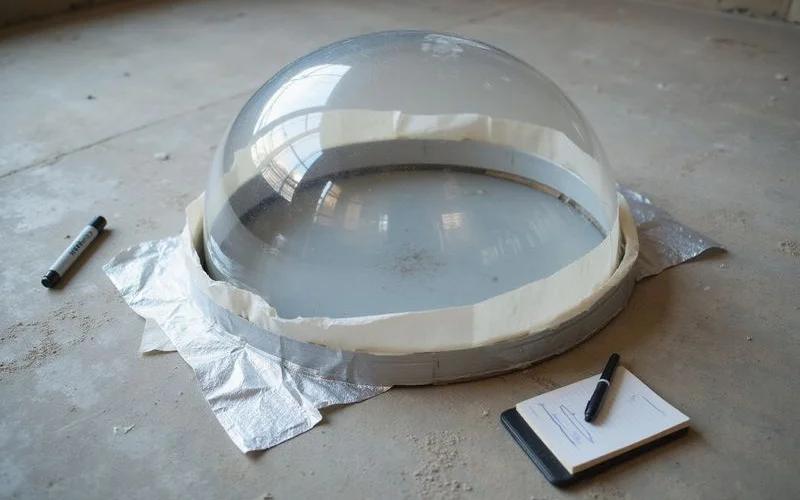
- Moisture: Any slab poured on the ground can pull moisture up from the soil, and that moisture can push a coating right off. That's why, depending on the slab and the system, we may test for moisture first. If a calcium chloride test shows more than 3 pounds per 1,000 square feet in a day, the floor usually needs a moisture barrier primer.
- Temperature: Each product has one temperature range for putting it down and another for use after, and we plan around both. Hot tire pickup, where tires pull the coating up, is common with thin, one coat garage kits. In an Austin summer, tires come off the pavement much hotter than the garage floor. As the rubber cools, it grabs the coating and can tear it right off the concrete.
- Sunlight: Standard epoxy resins turn amber in direct sun. If daylight hits the floor, a UV stable topcoat is a must, not an upsell.
- Prep work: Even the best coating is only as strong as its grip on the concrete. The International Concrete Repair Institute (ICRI) rates concrete roughness on a 1 to 10 scale called CSP. Coating makers usually ask for CSP 2 or 3 under thin coatings and CSP 3 to 5 under thicker ones. Poor prep is one of the most common reasons coatings peel, along with slab moisture. Expensive resin can't make up for a slab that was never ground.
What we won't tell you
That an epoxy floor is permanent, can't be damaged, or needs no upkeep. Every coating wears out in time. Knowing what wears yours out faster is more useful than hearing it will last forever.
Caring for an epoxy floor
Caring for an epoxy floor comes down to keeping grit off it and using a mild, pH neutral cleaner. Daily sweeping cuts down on the tiny scratches that dull a topcoat for good. Here's the routine we recommend.
- Routine: Sweep or dust mop daily to remove sharp grit, which acts like sandpaper on the resin. Wash weekly with a pH neutral floor cleaner, diluted the way the label says.
- Avoid: Never use scouring pads, strong solvents, or harsh acids. Household cleaners with vinegar or citrus can slowly dull the topcoat.
- Protect: Put mats where you park if your coating is thin and at risk of hot tire pickup. Set heavy shop equipment on rubber pads, not bare steel feet.
- Watch for: Keep an eye out for sudden bubbles, edges lifting, or dull patches. They can point to trapped moisture or chemical damage. But catch them early and repairs usually cost less.
Repair and eventual recoat
Even the toughest coatings wear out and need a pro to redo them. To repair one, we typically sand down the damaged area and put down fresh resin made for the same system.
Making a patch disappear is hard, and the color or sheen may not match exactly, especially on solid color floors where the patch edge catches the light. With proper care, a well built commercial epoxy floor often lasts 10 years or more, depending on traffic, thickness, and prep. After that, the topcoat wears thin.
When your floor gets there, you have two choices:
- Scuff and recoat: If the old coating is still bonded tight, we can scuff it with a sanding screen and put down a fresh topcoat.
- Full rebuild: This costs more because we grind the old coating off first. It's usually the only option once the coating has come loose or trapped moisture has ruined the primer.
Before you pick a repair plan, have a pro test how well the current coating is still bonded.
What a proper epoxy quote should say
A contractor you can trust puts the details in writing. Epoxy covers so many different products that a vague quote tells you almost nothing. We list the planned thickness on our epoxy quotes, because leaving it out is the easiest way for a low bidder to cut corners. Here's what a good quote should include:
| Line | What it should say |
|---|---|
| Prep method | Grinding or shot blasting, and how rough they plan to make the surface on the ICRI CSP scale |
| Moisture testing | Which test they'll use, and the plan if moisture readings come back high |
| Primer | The type of product, and whether it holds back moisture |
| Base coat | The product name and how many coats |
| Broadcast | Flake or quartz, how much of the floor it covers, and the color blend |
| Topcoat | The type of topcoat, how many coats, and whether it's UV stable |
| Film thickness | How thick the whole finished floor will be once dry, in mils |
| Cure times | How long to wait before people can walk on it and before heavy vehicles can drive on it |
| Repairs | Whether filling cracks and fixing chipped or broken concrete are included |
A quote that leaves out how the concrete gets prepped and what the topcoat is made of is close to useless. You can't fairly compare a detailed, layered system 40 mils thick with a vague quote, no matter how good the lower total looks.
Every project starts with an on-site evaluation. Actual scope, pricing, and expected results depend on your specific substrate condition, environment, and project requirements. The website describes our services in general terms. Your signed proposal governs the actual work.
Signs an existing coating is failing
Catch a failing coating early and you can often patch it before it spreads. If you're taking over an older floor, watch for these five signs.
Common warning signs
- Edge lifting: This shows up at doorways, joints in the slab, or around drains. Water finds the weakest edge first.
- Bubbling or blistering: This rarely means the product was bad. It usually means moisture from the slab pushed up under the resin.
- Chalky dulling: You'll see this where the sun hits the floor. The chalky look means sunlight has broken down a resin that wasn't UV stable.
- Delamination in sheets: Peeling in big sheets usually points to poor prep. A common cause is skipping the grinding that removes the weak, dusty top skin of the slab.
- Hot tire marks: These ugly marks show up when a coating that's too thin or not fully cured lifts off with a cooling tire.
We can cut out and patch small damaged spots. Lifting all over the floor is different: the coating has let go across the whole slab, and patching often buys you only a few months.
If you're deciding between epoxy and polishing
Coating or polish? Start by taking a hard look at your upkeep budget over the years. Read our comparison of polished concrete vs epoxy before you sign with anyone. We install both across Austin and the Central Texas towns we cover, and we suggest a product based on how you use the space.
What should drive your decision
- Cost over time: A slab that's been properly hardened and polished can often go many years with routine cleaning and occasional upkeep. That skips the costly recoat most resin floors need every 10 years or so.
- Traction: Polished concrete can meet the 0.42 wet rating in ANSI A326.3, the US slip test for hard floors, when it's kept clean. Grip depends on the finish, what's on the surface, and water. No floor is slip proof.
- Chemicals: Acids and harsh chemicals etch polished concrete, so a sealed resin coating is the better choice for wet processing areas or anywhere acids get spilled.
We'll say it plainly, even in an epoxy guide: polishing is often the better value for dry commercial spaces. Base your call on the space, how it's used day to day, and numbers you can check. If you'd like a moisture test, call or write, and we'll give you a straight recommendation for your building.