

A schedule beats good intentions
We often hear facility managers joke that their new commercial polished concrete needs no upkeep at all.
Run a floor on that belief and it usually turns dull and patchy, often within a year. Polishing creates the shine, but keeping it takes a steady commercial polished concrete maintenance schedule.
When the job is done, we walk you through care, cure times, and upkeep in person, and we're available after the job if you have questions or concerns. This guide covers the kind of routine we talk through, from the daily dust mop to the yearly check, and how to write it into your cleaning contract.
Daily
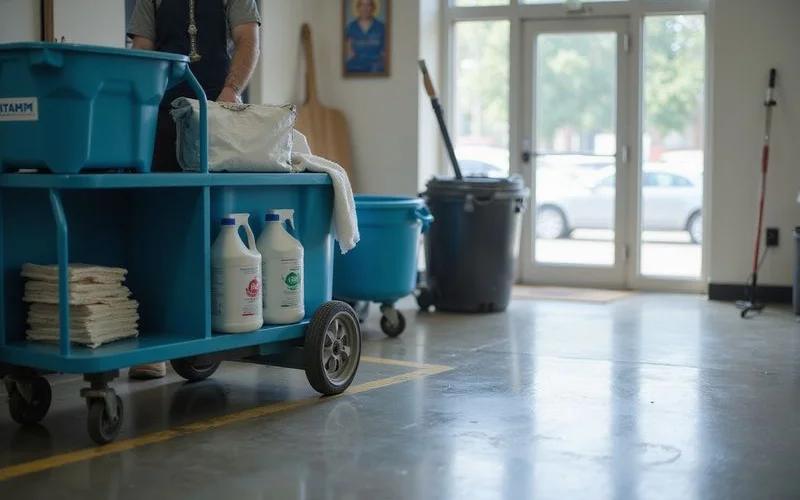
We tell clients that daily dust mopping is the best thing you can do for polished concrete. Under heavy foot traffic, grit acts like sandpaper and dulls the shine. Dirt affects grip, too. Slip resistance is measured as DCOF, a number for how much grip the floor gives. The US standard, ANSI A326.3, calls for 0.42 or higher on indoor floors that get wet. Dust, water, and cleaner residue can make a floor slicker than its rating, and no floor is slip proof.
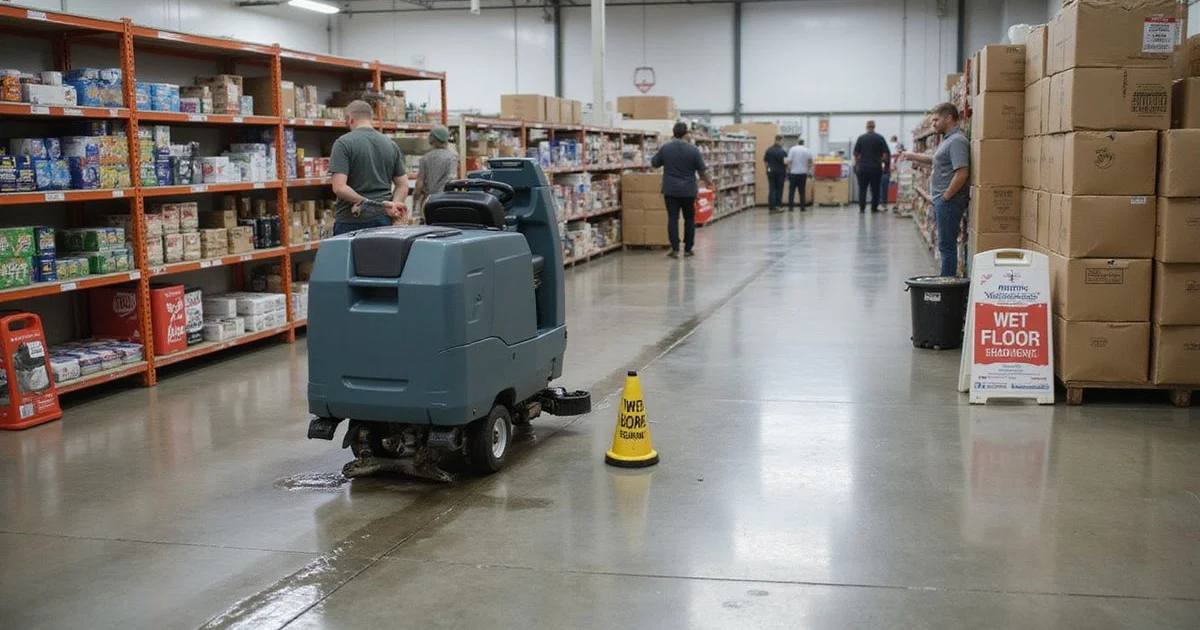
For large spaces, we like an auto scrubber, and the settings matter as much as how often it runs. Use a clean, soft pad and keep the down pressure light, since too much pressure leaves fine scratches that dull the finish.
If your building is over 50,000 square feet, robot floor scrubbers are worth a look. Robots running overnight routes can pay for themselves on big floors, depending on your labor costs.
- Check entry matting. Most dirt comes in through the front doors, and mats that are out of place or soaked can't catch it.
- Pick up all the dirty water. The scrubber's job is to leave the floor dry behind it. If dirty water dries on the floor, you've just spread the dirt around.
- Clean up spills right away. Acidic liquids can etch the surface for good. Oil is worse in a way: it soaks in so fast that mopping won't get it back out.
Weekly
Once a week, wash the whole floor with a mild cleaner made for polished concrete. This deeper clean has to reach the quieter areas, edges, and corners the daily scrubber misses. Pick that cleaner carefully, because it can make a big difference in how well the floor holds up.
Harsh chemicals don't belong here, because they eat into the surface. Two cleaners we like are Prosoco DailyKlean, which carries the EPA Safer Choice label, and Ameripolish Rejuvenating Cleaner. The Ameripolish cleaner is also made to leave a trace of hardener (densifier) behind each time you wash.
- Check the walking paths. Look for early dull spots where the main paths cross. Caught early, they usually come back with one quick pass of a burnisher, the fast spinning buffer we cover below.
- Check pads and equipment. A dirty or worn out pad can scratch the floor, so swap pads on a set schedule instead of waiting until they look worn.
Monthly to quarterly
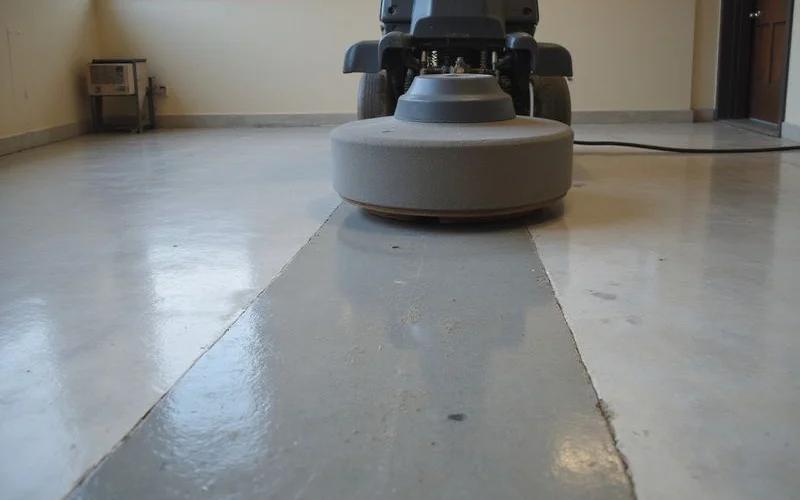
When a floor calls for it, we use high speed burnishing to bring the shine back in worn walking paths. A propane or electric burnisher spinning at 1,500 RPM or faster heats and smooths the surface. If the floor has a protective guard coat, that heat helps the coat bond and harden. We typically pair it with a diamond pad in the 1500 to 3000 grit range, depending on how glossy you want the floor.
How often depends on your foot traffic and the type of space. A busy store needs more attention than a typical office lobby.
| Environment | How often to burnish |
|---|---|
| Busy retail | Monthly |
| Restaurant front of house | Every four to six weeks |
| Office and lobby | Quarterly |
| Warehouse traffic lanes | Quarterly, or when it starts to look worn |
| Storage with light traffic | As needed |
Every month, edges and corners need a deep clean too. Dirt builds up where the baseboards meet the floor, and unless someone scrubs it out by hand, it can stain for good.
Once a year, or when the floor tells you
At the one year mark, it's worth checking how fast the floor soaks up water. You can test it yourself by pouring a little water on a busy spot and watching the concrete. If it darkens within two minutes, it's usually time for another coat of hardener to help the floor resist stains.
On a yearly check, we usually look over the floor with a light held low across it. Low light shows fine scratches, wear and etching far better than looking down from standing height.
When wear gets heavy, we can often repolish just the worn paths, which usually costs far less than new commercial flooring. Fixing small problems early can help keep upkeep costs down.
Products: what to use and what to keep off the floor
We see good floors ruined by cleaning crews who mean well but grab the wrong chemicals. That's why it pays to control what touches the concrete.
| Use | Avoid |
|---|---|
| A mild cleaner made for polished concrete | Acidic cleaners, citrus formulas, and vinegar |
| Clean water and clean recovery tanks | Strong alkaline industrial degreasers |
| Soft burnishing pads (1500+ grit) | Aggressive scouring pads or wire brushes |
| Hardeners (densifiers) the maker recommends | Wax, acrylic floor polish, or “restorers” |
| Proper entry matting | Anything that leaves a soapy film |
Tell your cleaning company this, word for word:
No wax, no floor polish, no shine restorer. Those products leave a film that clouds a polished floor, holds dirt, and sooner or later has to be stripped by a pro. The shine comes from the concrete itself.
Writing it into a cleaning contract
If an outside company does your daily cleaning, put this polished concrete cleaning schedule right into their contract. Don't assume a general cleaning company knows how hardened concrete reacts to chemicals. A good contract names the cleaner brands and the soft white pads for daily machine scrubbing.
We suggest the contract say the cleaning company has to report early dulling right away, not hide it under an acrylic wax nobody approved. A yearly walkthrough with your flooring contractor helps too, since a short look can catch small dull spots while a quick burnish can still fix them.
The mistakes we get called in to fix
We fix a lot of expensive mistakes, and almost all of them start with daily habits that slipped until the damage added up.
- The wrong cleaner, used over and over. An acidic bathroom cleaner or a harsh alkaline degreaser on a retail floor can ruin the finish in a single season. The floor looks worn, but the chemical has really eaten the surface, and fixing it usually takes grinding.
- An auto scrubber that leaves water behind. Rotate or replace the squeegee blades on a regular schedule. If the vacuum is weak or the blade is torn, the machine just spreads dirty, gritty water across the building.
- Pads left too long. Once a dirty pad picks up metal shavings or hard sand, it drags them across the entire floor.
- A shine restorer put down by someone trying to help. It's the one that frustrates us most. Someone sees the floor looks tired and puts down a cheap acrylic product made for vinyl tile. That leaves a cloudy film we have to strip off before we can even see the real damage.
- Matting removed or undersized. Entry mats stop a lot of outside dirt at the door. They're the cheapest upkeep item there is. But they're often the first thing thrown out in a lobby redesign.
Budgeting for floor maintenance
When we help with budgets, we treat polished concrete as a low running cost, not something you replace every few years. With regular care, a properly hardened floor can often go many years before it needs a full restoration, depending on traffic.
Labor is the biggest part of most cleaning budgets. Some of our clients have cut that cost with robot scrubbers. That can free up staff hours for work that matters more, like cleaning edges and handling spills right away.
From what we've seen, big repair bills tend to come less often than with tile or coated floors. Budget for regular checkups, light burnishing, and repolishing the busiest paths now and then. That's closer to real life than saving for a whole new floor.
How this differs from a home floor
Homes see a tiny fraction of the wear a commercial floor gets. Most home floors need little more than dust mopping, a damp mop with clean water, and quick spill cleanup. We cover that basic routine in our polished concrete maintenance guide. If your floor is still going in, our commercial polishing project planning guide covers the handover steps and when you can use it again.
At home, we only suggest high speed burnishing once in a great while, when the floor needs it. Has your commercial floor already dulled? Take a few photos with a flashlight held low across the surface and send them to us.
We'll look at the scratching and tell you what we think the floor needs, even if the answer is just a better daily cleaning routine.