

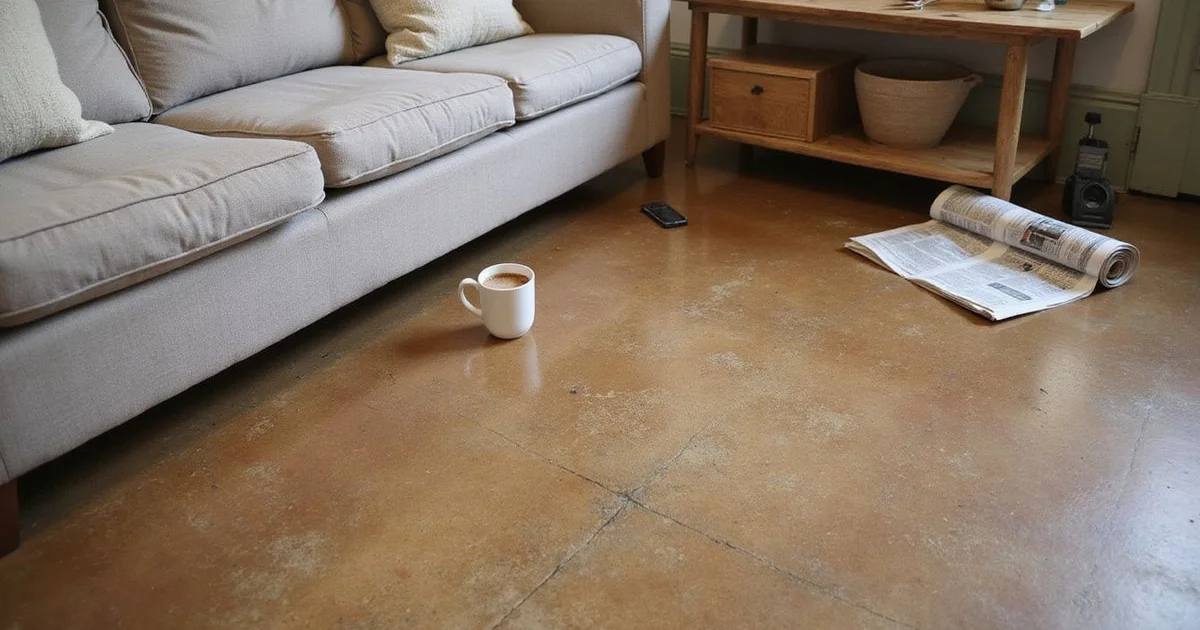
They answer different questions
Polished concrete vs stained concrete is the pair we see people mix up most, because the words describe different kinds of things.
Staining is about color. An acid stain reacts with the concrete and leaves blotchy, uneven tones. A water based dye soaks in and gives you more even, predictable color. Either way, the thing you're changing is the floor's color.
Polishing is about surface. We work the concrete with finer and finer diamond pads, and often add a hardener that soaks in, so it gets smoother and harder. That controls how much stone shows and how shiny the floor gets.
You can do one, the other, or both. On our polished concrete jobs, “both” is a very common answer.
Acid stain and dye are not the same thing
People use “stain” for both, so it's worth pulling them apart:
Acid stains react with the lime in the concrete and leave mineral deposits behind. The result is uneven and a bit unpredictable: blotchy and translucent, with color that moves across the floor. You're limited to earth tones: browns, tans, soft greens, rust. People pick it for exactly that natural look, and accept that no two slabs will react the same way.
Dyes are colors mixed into water or solvent that soak into the surface. You get much more control over color and more choices, including grays, charcoals, and colors no acid stain can make. So dyes give you an even look, while acid stains give you that shifting, uneven color.
For polished floors indoors we usually use dye, because it behaves predictably during the polishing steps. Most dyes fade in strong sun, which is why they suit indoor floors.
Combining color with polishing
Here's a common order, though the steps depend on the slab and the system: grind to the agreed amount of stone, dye, harden, then keep polishing with finer grits. The color ends up in the surface we polish rather than sitting on top of it, which is why it tends to wear with the floor instead of scratching off.
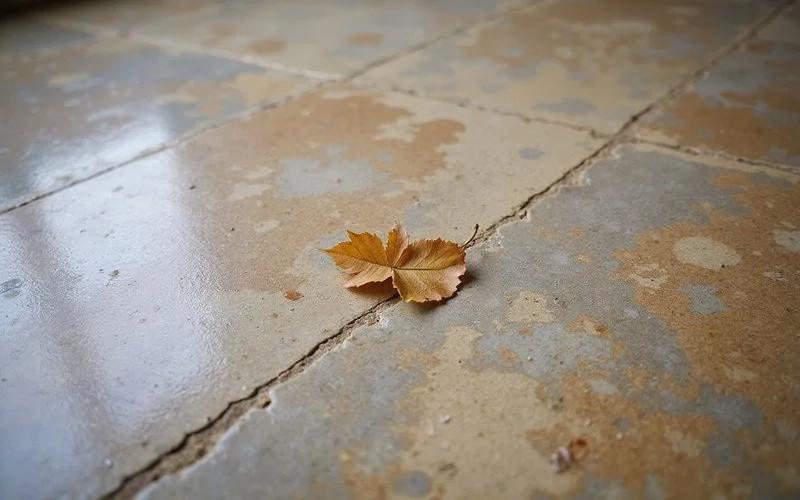
Two practical notes. First, the more stone that shows, the less the color stands out. Stone doesn't take dye the way the cement around it does, so the color becomes a background instead of the whole story. Second, color doesn't hide repairs. It makes a patch stand out less, sometimes a lot less, but a trench line stays a trench line.
Stained but not polished
A stained floor that hasn't been polished needs protecting, usually with a sealer on top, and a sealer comes with its own upkeep. It usually looks colored and glossy, and it behaves more like a grind and seal floor than like polished concrete.
That's a fair choice, especially when the slab can't be polished, as long as you pick it on purpose and not by accident.
How to decide
| If you want | Choose |
|---|---|
| Natural concrete tones, polished surface | Polishing alone |
| Warmth or a specific color, with a durable surface | Dye plus polishing |
| A natural, blotchy, one of a kind look | Acid stain, then polish or seal |
| Color on a slab that can't be polished | Stain plus a sealer on top |
| The most even color across a large area | Dye, ideally with a sample you approve for each area |
Ask to see it on your own slab
Color on concrete depends on the slab it goes on, and the same dye on two different slabs gives two different results. A sample on your own floor gives you the closest preview, though the full floor can still vary. We'll talk about whether one makes sense during the consultation.
Where color earns its place
Color doesn't always make a floor better, and when your natural concrete already looks good, we'll tell you so. Here's where it really helps:
Evening out a patchy slab. When several pours, old repairs, or stains leave a floor patchy in color, a dye can pull the whole thing toward one look. It won't erase a trench line, though it can soften how much it shows.
Warming a cold room. In rooms that face north or don't get much daylight, gray concrete can feel cold and harsh. A warm tone can change the feel of the room more than most people expect.
Matching your design. Say the cabinets, trim, and wall colors are already picked. At that point, a charcoal floor instead of a medium gray one can make or break the look.
Adding depth to a cream finish. A cream floor has very little stone showing, so color gives your eye something else to look at.
Color helps less on a floor with lots of stone showing, because the stone takes over and hardly picks up the color.
What to ask for in a color sample
Color choices go wrong when the sample doesn't match the real floor. Ask for:
- The sample applied to your own slab, not a panel brought from the shop
- At least two tones side by side, so you're comparing instead of guessing
- The sample polished to your chosen sheen, since the shine changes how color looks
- A look at it in daylight and under the room's own lights
- A photo of the sample, so you have something to check against later
A dye that looked right on a shop panel can look totally different on a slab with its own base color.
The order that keeps your options open
If you're unsure about color, start by deciding how much stone shows and how shiny you want it. Those are covered in our finishes guide. When the job calls for it, we grind a test area. You look at the natural concrete under your own lighting, and then decide whether it needs color. A lot of homeowners who come in set on a stained floor end up picking the natural tone once they see it ground properly.