

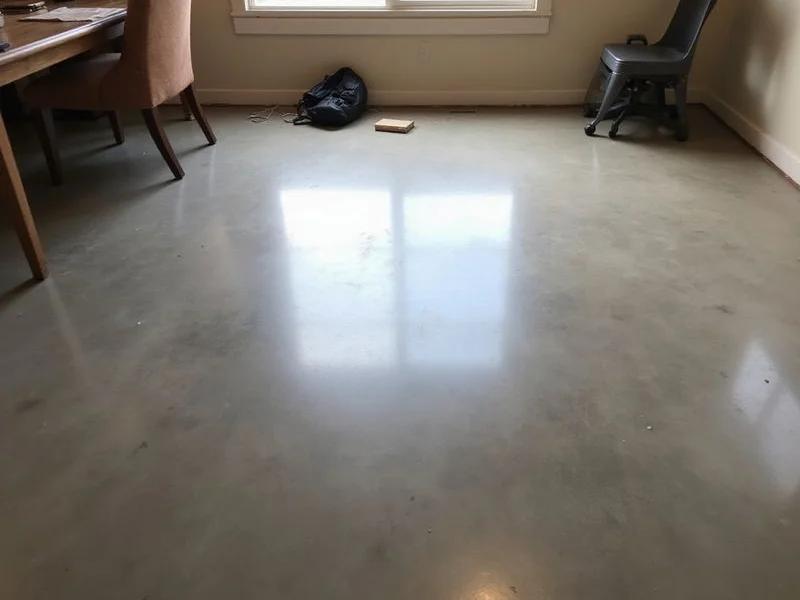
Two floors that can look identical on day one
A grind and seal floor and a mechanically polished floor can look almost the same in a photo. But they're built differently, they act differently by year three, and they need different care for as long as you have them.
With polished concrete vs grind and seal, the whole difference comes down to one question: where does the shine come from?
Mechanical polishing grinds the slab, usually hardens it with a silicate hardener that soaks into the concrete, then polishes it with finer and finer diamond pads. The shine is the concrete itself, made smooth and hard enough to reflect light.
Grind and seal grinds the slab to show as much stone as you want, then puts a sealer on top. That's often an acrylic, urethane, or epoxy product. When the floor shines, it's that layer you're seeing.
How they compare
| Consideration | Mechanical polishing | Grind and seal |
|---|---|---|
| Where the shine comes from | The slab itself | A sealer layer on top |
| What the slab needs | Fairly solid, hard concrete | Handles softer or weaker slabs better |
| Upfront cost | Higher: more steps | Lower: fewer passes |
| Maintenance | Cleaning plus a buff now and then | Cleaning plus a new coat every so often |
| Scratches | Marks the concrete; often buffs out | Marks the sealer; shows until recoated |
| Repairs | Polishing a spot again often blends in, but can still show | Recoating one patch can show |
| Moisture | Moisture passes through | Some sealers trap moisture and turn cloudy |
| Over the long haul | Polish again after many years | A new coat again and again |
When grind and seal really is the right call
On some slabs, sealing really is the better choice:
Soft or crumbly concrete. Some surfaces won't take a polish: they stay dusty, the hardener doesn't do its job, and the clear shine never shows up. A sealer can often give you a floor you're happy with where polishing would let you down.
Slabs with a lot of variation. A sealer, especially a tinted one, can even out patchy color in a way polishing won't.
Tight budgets and short timelines. A tenant building out a space on a five year lease can reasonably pick the lower upfront cost and live with recoating.
Spaces where you want what a sealer does. Some sealers resist stains better than bare polished concrete, and sometimes that matters more than how long the floor lasts.
What to watch out for
The main problem we see with grind and seal isn't the floor itself but the way it gets sold. Because the two look alike when new, a ground and sealed floor often ends up called “polished concrete” too. Then the owner expects polished concrete upkeep. The surprise comes when the walking paths scuff up two years in.
Ask this before you sign
“Is the shine coming from the concrete or from a coating on top?” Ask it plainly. A straight answer tells you what you're buying and what upkeep comes with it.
Maintenance in practice
You dust mop a polished floor, damp mop it with a pH neutral cleaner, and buff it now and then when the walking paths go dull. There's no coating to strip.
You clean a sealed floor the same way, but you have to keep the sealer in mind. Skip solvents that eat it and scrubbing pads that scratch it, and plan to recoat once you can see wear. Recoating means cleaning, maybe scuffing, and putting down fresh product, which makes it a planned project rather than routine cleaning.
Our maintenance guide walks through the full routine for polished floors.
The view over ten years
Think of the two as different ways to pay, not different prices.
With polishing, you pay most of the cost up front, because the job takes more steps, more tools, and more time on site. After that the floor usually just needs cleaning and the odd buff, with no big planned expense coming. If it wears after many years, we can usually polish the worn spots again instead of the whole floor.
Grind and seal spreads the cost. It costs less up front, then needs a new coat when the sealer wears through in the walking paths. Each new coat means prepping the old sealer, putting down fresh product, and keeping people off the floor while it cures. In a busy business, that can happen several times in ten years.
We don't see either one as wrong. A five year lease with an unknown future leans toward the lower upfront cost. A home you own and live in, or a building you'll use for the long haul, usually leans toward paying more up front.
How to tell what you already have
If you've inherited a shiny concrete floor and can't tell which kind it is, three quick checks will tell you a lot:
Scratch test in a hidden corner. Drag a coin firmly across a sealed floor and it leaves a mark in the sealer. On a polished floor it marks the concrete itself, if at all, and looks quite different.
Water test. Drop some water on the surface and watch: a sealed floor usually beads it. A bare polished floor may darken a little where water sits, because the concrete still soaks up a tiny bit. A stain guard can make a polished floor bead water too, so treat this one as a hint.
Look at the edges and doorways. Sealers build up a bit at the edges and can show a lip or a different shine where they stop. A polished floor looks the same right up to the edge.
Once you know which you have, you know how to care for it, and whether the dull spots need a buff or a new coat.
How we decide on your slab
What we find on your slab decides it, not what we'd prefer. We check how hard the surface is, how deep the stone sits, and whether the hardener will work properly. If it will, polishing usually gives you the better floor over the long run, and we'll say so. When it won't, we'll recommend sealing and walk you through the recoating that comes with it.
Sometimes neither works, because the slab is too damaged or too patchy to look right either way. Then a polishable overlay can give you a new surface that does. We go into which slabs can take a polish in our guide to polishing existing concrete.