

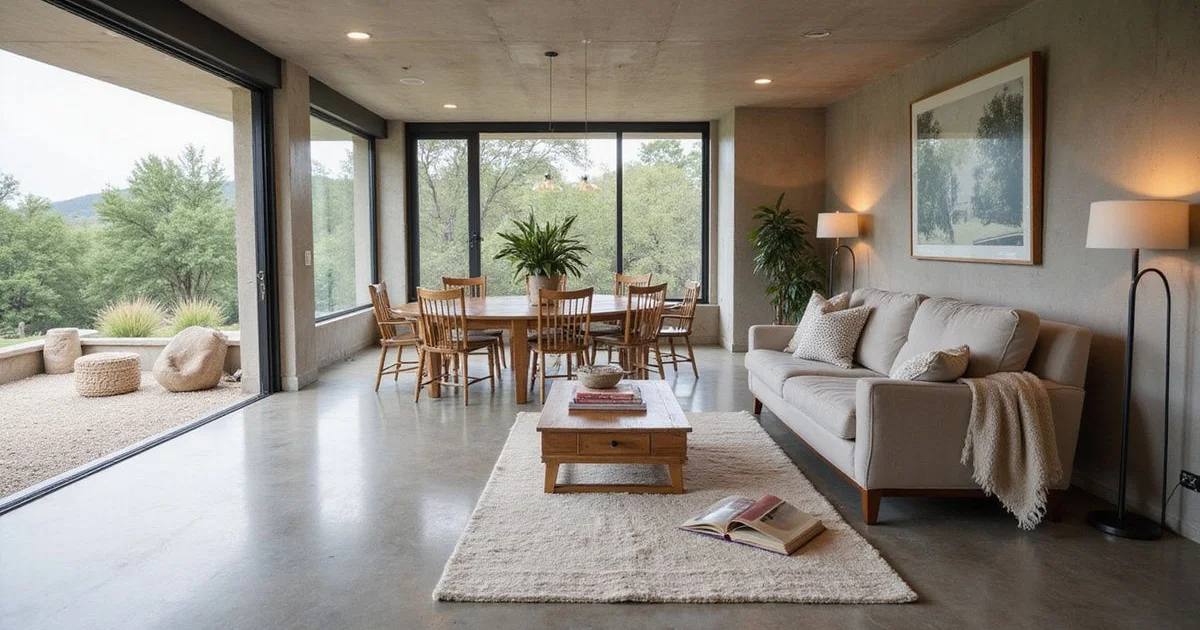
The good and the bad, honestly
Most of what you read about polished concrete is glowing, and it's usually written by people selling it. This is the version we'd give a friend: polished concrete floors, pros and cons, and when to pick something else. We explain how we do the work on our polished concrete page.
What it does well
There's no thick coating to fail. This is the big one. Polishing works on the slab itself, so there's no thick layer on top to peel, bubble, or come loose. It does get duller over the years, and that's something we can usually fix.
Very low routine maintenance. Care comes down to dust mopping and damp mopping with a mild, pH neutral cleaner, with no waxing, no stripping, and no annual recoat. Over ten years it usually takes far less upkeep than most floors.
It usually handles traffic well. When the slab calls for it, we harden the surface as part of the job. That's one reason you see the same floor in warehouses, stores, and busy family homes.
It works with underfloor heating. Concrete soaks up heat and holds onto it, so if you have radiant heat the floor stays warm and gives that warmth back to the room.
It's the floor you already own. There's no new material to make, ship, and eventually throw away. The slab is already there.
It suits Austin’s climate and dust. A hard, tight surface you can dust mop clean beats carpet here, where fine grit gets tracked in most of the year.
Where it falls short
It's hard. Dropped glasses break, and standing for long periods is less comfortable than on wood or vinyl. A cushioned mat where you stand to cook makes sense, and it doesn't mean the floor failed.
It's sensitive to acids. Wine, citrus, tomato, and some cleaning products etch the surface. Etching isn't a stain you can clean off: the acid actually changes the surface, and fixing it usually means polishing that spot again. Wiping spills up quickly helps prevent most of it.
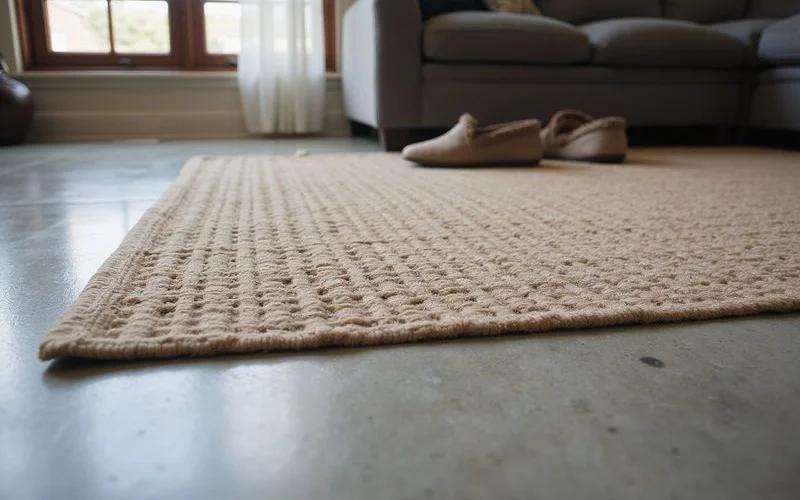
Sound carries. A big open room with hard floors echoes. Rugs, soft furniture, and curtains are part of the plan, not extras.
The result depends on the slab. You can't order the exact look the way you can with a floor made in a factory. Shifts in color, how the stone is spread through it, and old repairs all come with the concrete you have. Our slab suitability guide explains how we check a slab.
Repairs stay visible. Filled cracks, trench lines, and patches show as part of the floor. Many owners like that, and some don't.
It can feel cool. Pleasant for most of an Austin year, less so on a January morning in a bedroom without radiant heat.
Where it fits, room by room
| Space | Suitability | Note |
|---|---|---|
| Living and dining | Strong | Rugs cut the echo and add comfort |
| Kitchen | Strong, with care | Wipe acidic spills up quickly |
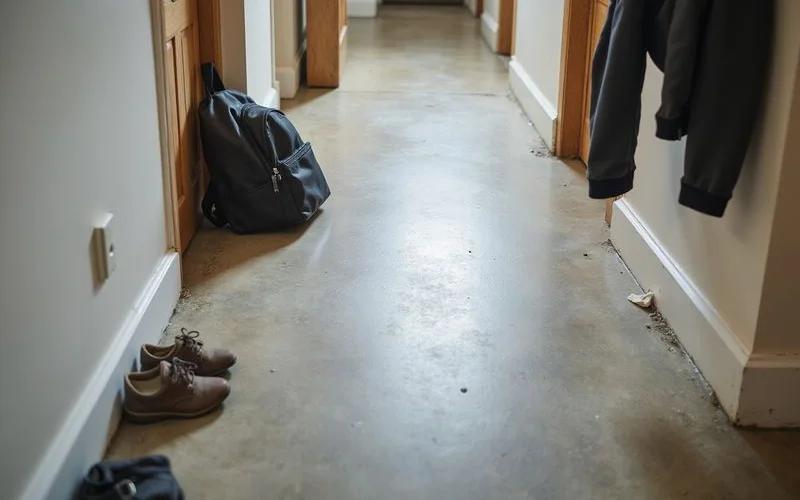
| Entry and hallway | Excellent | Tough, and a dust mop keeps it clean |
| Bedrooms | Mixed | You give up some comfort and warmth |
| Bathrooms | Case by case | Talk through grip when wet |
| Garage | Usually not | A coating usually suits better |
| Retail and office | Excellent | You see it in stores and offices for the reasons above |
| Warehouse | Excellent | Often with a hardener and filled joints, depending on the slab |
The question that really decides it
It's not “is polished concrete good?” It's “is this slab right for this room and the people using it?” Only the second question has a useful answer.
When something else is the better call
If the slab is badly damaged or too patchy to give you a floor you'd enjoy, a polishable overlay gives you an even look instead. If the space needs to stand up to chemicals, or needs one continuous surface that curves up the wall, epoxy is usually the better fit. And if comfort matters more than durability in a room, we'll tell you to go with wood or a softer floor like vinyl. We'd rather say so than sell you a bedroom floor you regret.
Cost of ownership, not just installation
People compare the install price, but what it costs to own over ten years matters more. That's where polished concrete earns its keep.
There's no top layer to replace, no coating to redo, and no stripping and resealing every few years. Your ongoing costs are usually cleaning supplies and, in busier spaces, an occasional buff with a fast spinning pad. When something gets damaged, we can often fix that one spot instead of replacing a section. The fix often blends in because it's the same material, though a repair can still show.
The install price is less simple, and it swings a lot depending on what has to happen before polishing starts. On a bare slab in good shape, it's often about what you'd pay for middle of the road flooring. On a slab that needs tile pulled up, glue ground off, and a lot of repair, the prep work can cost more than the polishing. Our cost guide walks through each of those costs, and we'll go over which ones apply to your floor during the consultation.
The short version: polished concrete is rarely the cheapest floor to install, but it's often one of the cheaper floors to own.
Questions to ask yourself before deciding
- Who lives here? Small kids, older family members, and dogs each change the answer in their own way.
- How much natural light does the room get? Strong light from one side makes a glossy floor glow, but it also shows every flaw.
- Will you actually dust mop? Be honest. The answer should decide how shiny you go.
- Do you want the floor to be a feature or a background? How much stone shows and how shiny it is both follow from that.
- How long are you staying? If you're staying ten years, more prep work makes sense than if you're staying two.
- What is the slab actually like? All of the above is guesswork until someone looks at the slab in person, and sometimes grinds a test area.
Find out if your own floor is a good fit
Send us the floor size, how the room is used, and photos of the slab. You'll get our take on your floor, not a sales pitch, and sometimes that means we tell you polished concrete isn't what that room needs.